Among all the tools used to maintain a healthy website, few are as essential as the 301 redirect. Although simple, this type of redirect significantly influences user experience, search engine visibility, and the long-term performance of your pages. Understanding what a 301 redirect is and how to use it correctly is a core part of modern SEO terminology.
This article explains how 301 redirects work, when to use it, and why they play a major role in several key ranking factors.
What Is a 301 Redirect?
A 301 redirect is a permanent redirect that sends both users and search engines from an old URL to a new one. When a search engine encounters a 301 response, it understands that the page has moved permanently and should transfer most of its authority to the new location.
A 301 redirect differs from other types of redirects:
- 302 redirect – temporary redirect
- 307 redirect – temporary redirect under HTTP/1.1
- Meta refresh – an HTML-based redirect, less reliable for SEO
Since a 301 redirect signals a permanent change, it provides the most consistent results for both Google and users. This makes it a common topic within technical SEO, especially during site updates and migrations.
When to Use a 301 Redirect
There are specific scenarios when to use a 301 redirect, and they usually involve permanent changes to your site’s structure. The most common cases include:
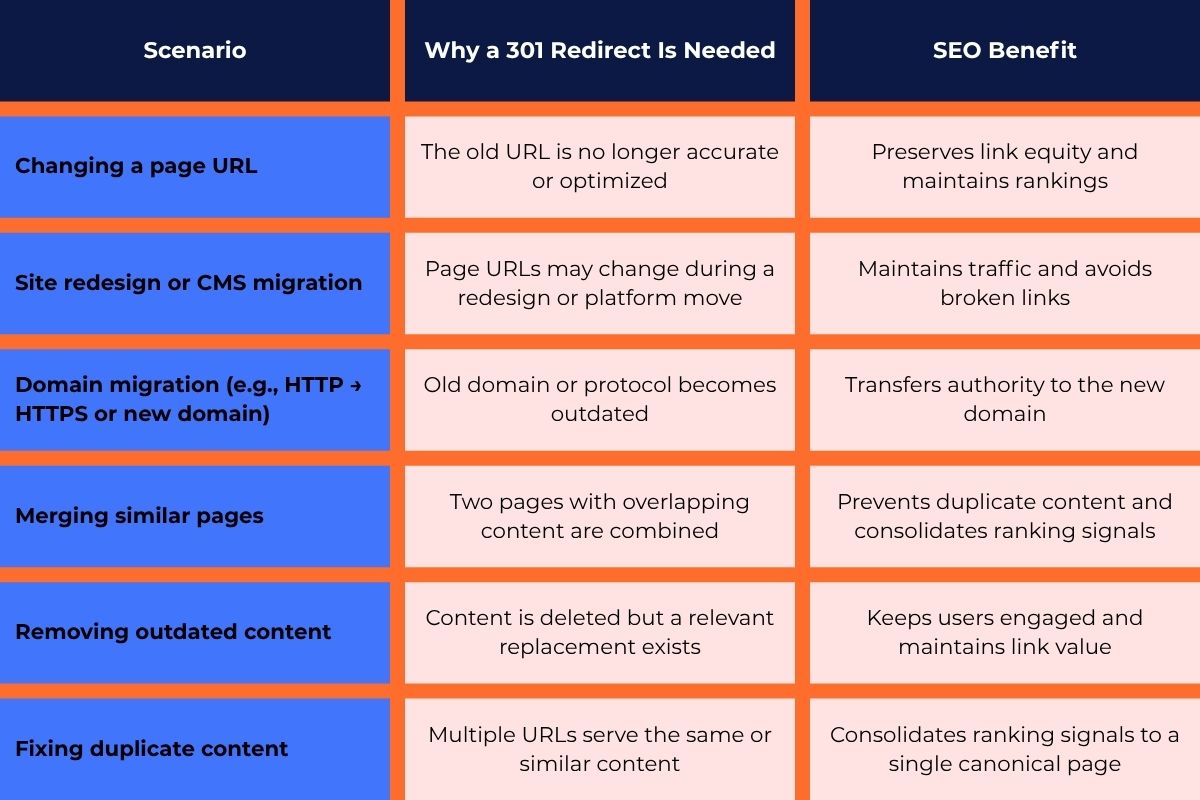
Using a 301 redirect in these situations ensures that the old page’s authority, backlinks, and relevance transfer to the updated URL, and protects your visibility at the same time in search engines.
How a 301 Redirect Works
When someone tries to access an old URL, the server returns an HTTP status code 301. This code tells search engines:
“This page has permanently moved. Use the new URL instead.”
Google then updates its index and begins ranking the new URL instead of the old one. Users are automatically sent to the new location, usually without even noticing the change.
This process keeps your content organized and prevents search engines from treating your new and old URLs as separate pages.
Why 301 Redirects Are Important for SEO
In SEO terminology, a 301 redirect is more than a simple URL change because it plays a crucial role in site performance. There are several essential 301 redirect SEO benefits that directly influence your search performance. Here are the most significant ones:
1. Preserving Page Authority
A properly implemented 301 redirect transfers most of the original page’s authority (link equity/PageRank) to the new URL. Because of this, one of the main reasons SEO professionals stress the importance of 301 redirects is their ability to preserve domain strength.
2. Preventing Duplicate Content
Duplicate content weakens rankings because search engines struggle to determine which version is the primary one. A 301 redirect consolidates signals and points everything to a single, canonical page.
3. Improving User Experience
Users don’t end up on a 404 page or outdated content. They’re smoothly redirected to the correct page, which lowers bounce rates and improves engagement.
4. Maintaining Keyword Rankings
If you’re switching URLs or reorganizing content, a 301 redirect ensures that your existing rankings remain stable. This is especially important during domain or website migrations.
When Not to Use a 301 Redirect
A 301 redirect isn’t always the correct choice. Avoid using it in situations like:
- Temporary moves — use a 302 instead
- A/B testing or experiments
- Redirecting to unrelated content just to keep traffic
- Cases where you can simply update internal links instead of redirecting
Other common mistakes include:
- Creating long redirect chains
- Setting up circular redirects
- Redirecting everything to the homepage
- Forgetting to update the XML sitemap
Each of these can cause indexing issues and ranking drops, which is why understanding the importance of 301 redirects is key for a stable site structure.
How to Implement a 301 Redirect
The method you use depends on your server environment or CMS.
Server-Side Setup
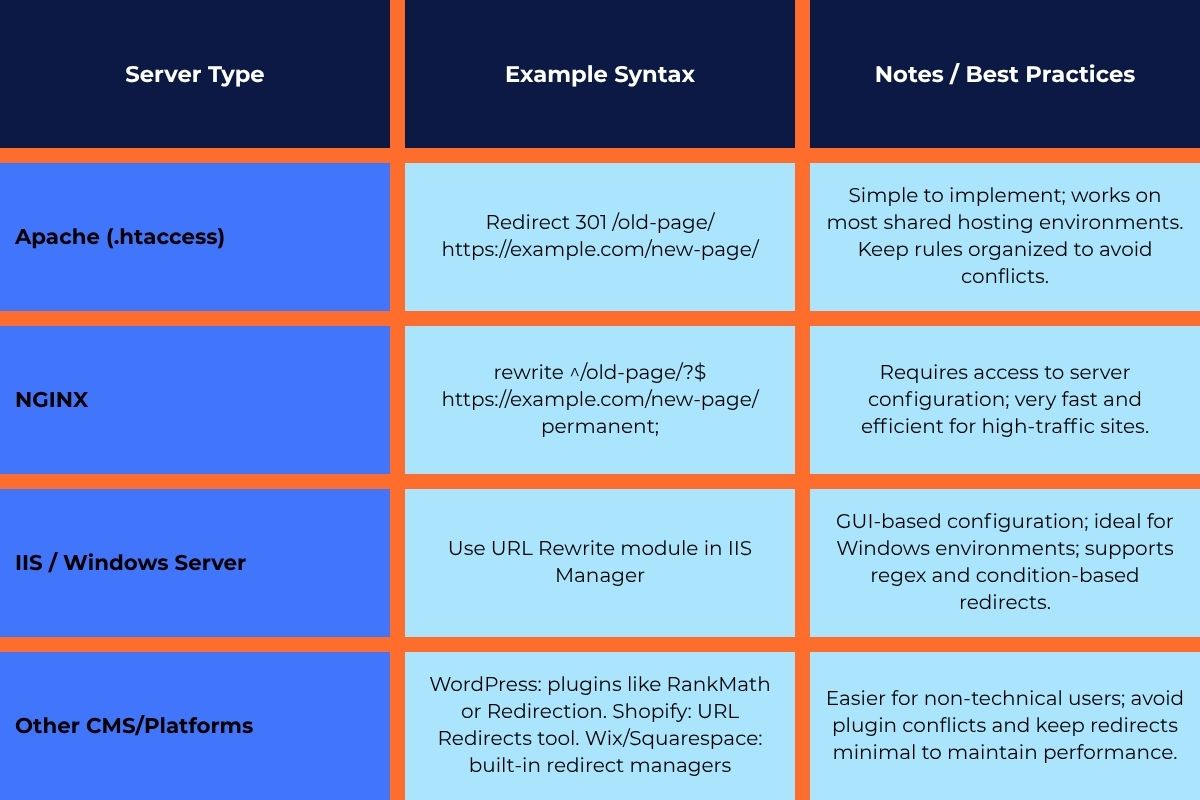
When implementing 301 redirects, the exact method depends on your server environment. Each server type has its own syntax and best practices, so it’s important to choose the correct approach to ensure redirects work properly and pass SEO value. The table below summarizes common server setups and provides examples to help you implement 301 redirects efficiently.
Best Practices
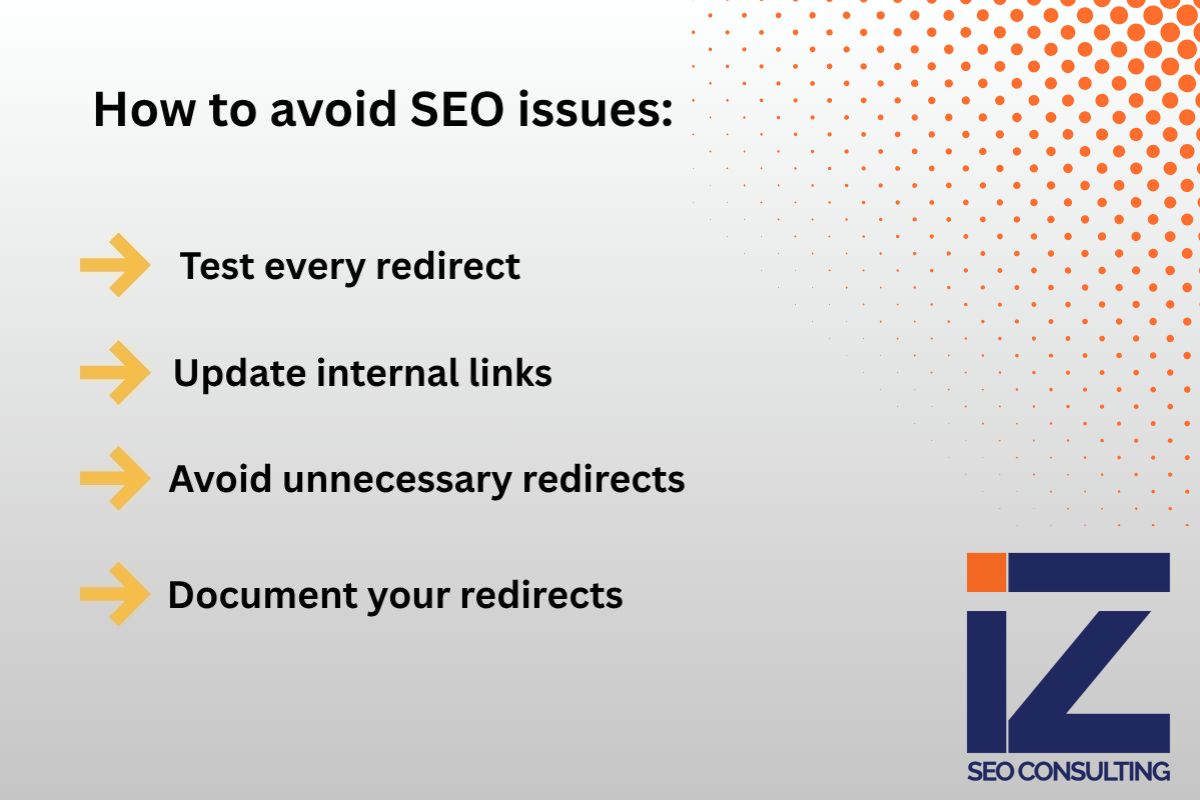
Professionals from Indexed Zone SEO suggest keeping redirect chains to a minimum to avoid losing crawlability and link equity. To avoid SEO issues:
- Test every redirect after implementing it
- Update internal links to point to the new URLs directly
- Avoid unnecessary redirects
- Document your redirects to prevent duplication
These habits keep your redirect structure clean and efficient.
Common 301 Redirect Mistakes
Even experienced site managers sometimes misconfigure redirects. The most frequent mistakes include:
- Redirecting all deleted pages to the homepage
- Using 301 redirects for temporary changes
- Forgetting to update internal links or sitemaps
- Allowing redirect chains to accumulate
- Not monitoring 404 pages after large updates
Most of these errors can be avoided with proper planning and by understanding basic technical SEO principles.
How to Test and Monitor 301 Redirects
Ongoing monitoring is essential for maintaining SEO performance. The best tools include:
- Google Search Console – helps track indexing issues
- Screaming Frog – detects redirect chains and errors
- Online redirect checkers – good for quick, manual verification
Regular monitoring minimizes ranking drops and ensures your redirect logic remains strong.
Conclusion
301 redirects are a simple yet powerful asset for maintaining the structure, authority, and performance of your website. They help preserve rankings, eliminate duplicate content, improve user experience, and maintain the value of your backlinks. Because of their long-term impact on Google’s ranking factors, understanding when to use a 301 redirect is essential for any website owner.
Properly implemented, these redirects help maintain site stability during structural changes and strengthen long-term visibility. That’s one of the key reasons behind the growing importance of 301 redirects in modern SEO.