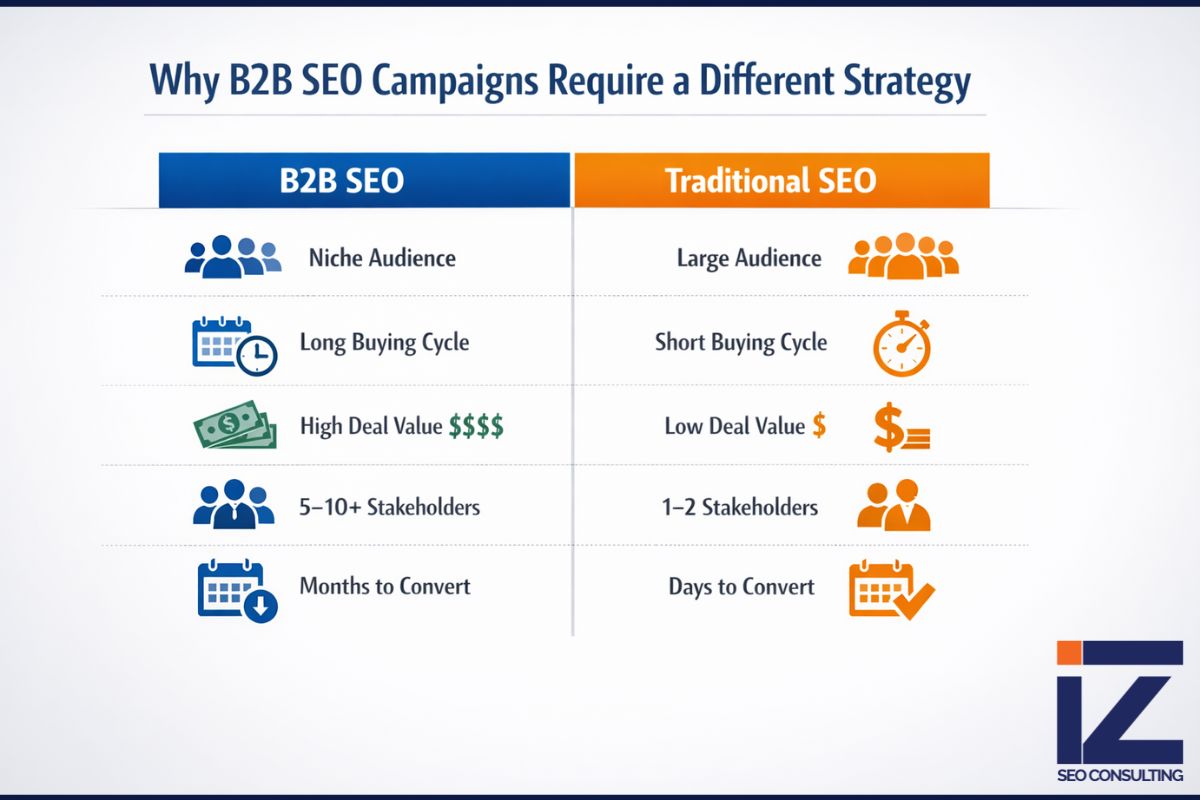
B2B SEO campaigns are not the same as normal SEO campaigns. You are working with a smaller audience, working with longer buying cycles, and working with much larger stakes. One contract could be worth $50k, $100k or even more. That completely changes how you need to think about strategy.
What most B2B companies tend to get wrong is thinking they have a problem with traffic. They have a problem with the quality of that traffic. The audience coming to your site isn’t the audience you need. The aim of a solid B2B SEO campaign is not about how much traffic you get. It is about how much qualified traffic you get that will ultimately lead to conversion.
In this Indexed Zone SEO article, we will cover how to create revenue-focused campaigns, unlike the campaigns that are there and aim for only vanity metrics.
Steps to Developing B2B SEO Campaigns
Developing a successful B2B SEO campaign means that you must shift your thinking from a focus on traffic volume to a focus on traffic intention. The most successful B2B SEO campaigns have a focus on precision, establishing authority, and ensuring that everything integrates with your sales process.
Let’s break this down step by step.
Strategizing around Revenue-Aligned Keywords
Every effective process starts with intent-driven keyword analysis. Not every keyword has the same value in B2B.
Abandon the high-volume vanity keywords and focus on:
- Bottom-of-funnel terms with buying intent
- Keywords centered around specific industry-related problems
- Keywords about competing solutions
- Long-tail keywords your buying committee actually uses
Keywords like “CRM software” are too broad. However, “HIPAA compliant CRM for healthcare providers” clearly points to a buyer.
Well-structured keyword research will help you identify the keywords your customers use.
Create a Content Map for the B2B Buying Journey
B2B customers do not make spur-of-the-moment purchases. They tend to involve multiple stakeholders beyond just legal and financial teams, and the buying committee usually takes weeks or even months to reach a conclusion.
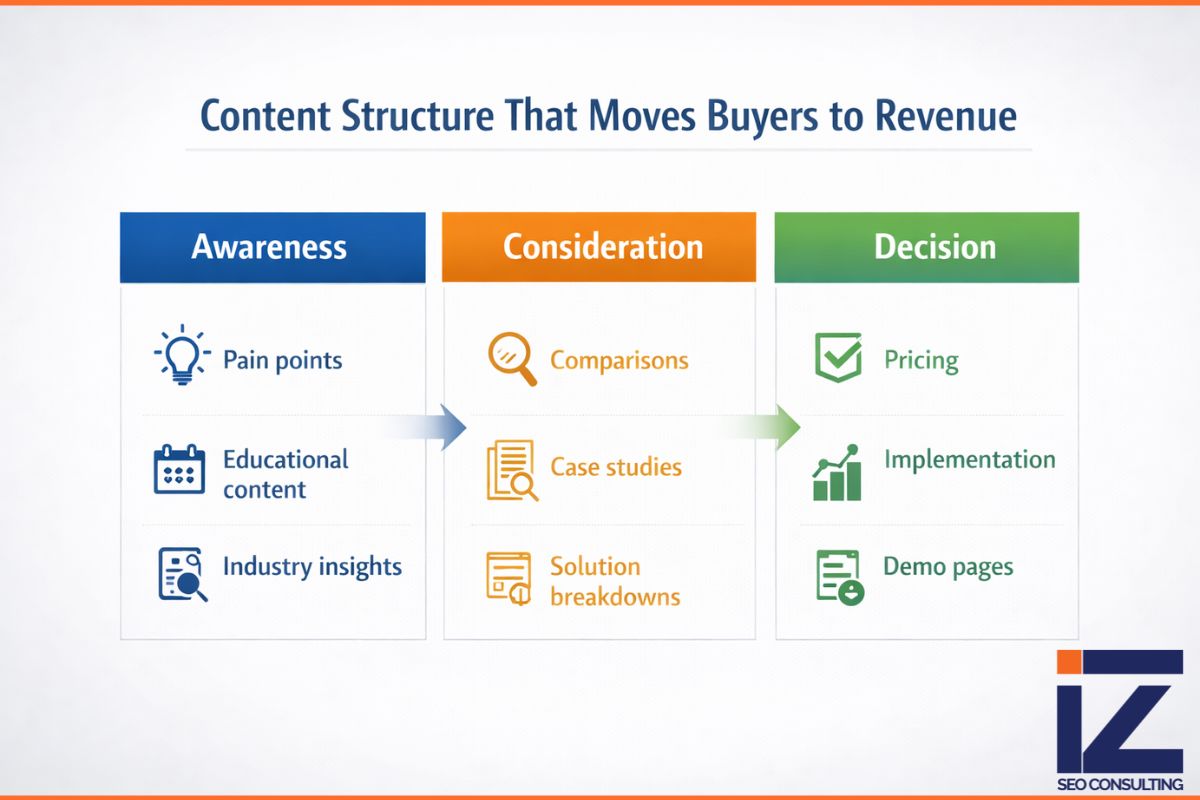
Your content has to coincide with this.
For the Awareness Tier
- Industry pain points
- Educational content
- Trend breakdowns
For the Consideration Tier
- Comparative analysis
- Case studies
- Solution pages with more than average detail
For the Decision Tier
- Pricing
- Implementation guides
- Demonstration page
The most effective B2B SEO campaigns don’t just throw together random blog posts. They create a content ecosystem where each element is interconnected and guides the prospects toward a purchase.
Develop Topical Authority Instead of Just Pages
Google distinguishes real expertise. Within B2B, it means going deep, not wide.
Avoid spreading your scope across different areas. Instead, develop topic clusters:
- Central service page
- Supporting subtopic pages
- High-end technical
- Real-world demonstrations
With this, you improve your internal linking, and your relevance becomes obvious to search engines.
For larger companies, this sometimes becomes a part of a complete enterprise SEO strategy where content, site structure, and authority signals unify at scale.
Don’t Ignore Technical Foundations
Most B2B sites have technical issues that affect crawlability, indexation, and user experience. These include:
- Painfully slow load times
- Broken internal linking
- Cms issues that duplicate pages
- Weak or absent schema markup
Addressing technical SEO issues allows search engines to crawl your site and focus on your revenue-generating pages.
There is usually a significant problematic issue of having a large blog that dilute authority of high-converting service pages. Smart internal linking solves this.
Pipeline Driven B2B SEO
Understanding pipeline-driven B2B SEO means thinking beyond where you rank; it requires a lot of execution as well as good strategy.
Budget-wasting campaigns are easy to spot. Budget-saving campaigns are tricky to define. Here is what works.
Integrate SEO with Sales Analytics
Too many SEO teams operate independently. You are risking running your campaigns with blinders on.
Regularly pull your CRM data and answer the following questions:
- Which pages are associated with closed deals?
- Which keywords were mentioned during initial sales calls?
- Where are prospects getting stuck in the funnel?
When SEO is aligned with sales objections, the business generates higher sales.
Example: If a sales rep is getting a lot of questions during sales calls about security, create a security page and optimize it for that query.
This is how you win the b2b sector seo game and create a sales funnel that is shorter than your competitors.
Prioritize the pages with the highest user intent
In B2B, your best-performing pages generate 80% of the business. Prioritize the following pages:
- Service pages
- Industry pages
- Case studies
- Comparison pages
The time to optimize these pages is now, and the time to pump out another useless funnel blog is never.
Top b2b SEO practices focus on pages that increase revenue generation.
Value What Is Actually Valuable
Traffic is not a valuable metric.
Value your time on metrics that are revenue aligned.
This includes:
- Qualified organic leads
- Assisted conversions
- Demo requests
- Sales-qualified lead growth
Master the conscious revenue-driving SEO metrics. Once you have these down, it will help you focus on improving the rankings of your commercially viable pages, rather than the irrelevant blog pages.
Also, knowing which SEO ranking factors will be most helpful for you will help you focus on improvements that will help the business the most.
When transforming these metrics for the business, changing from vanity metrics to revenue metrics is where the most growth will happen.
Pro Tip: Target Buying Committees Over Keywords
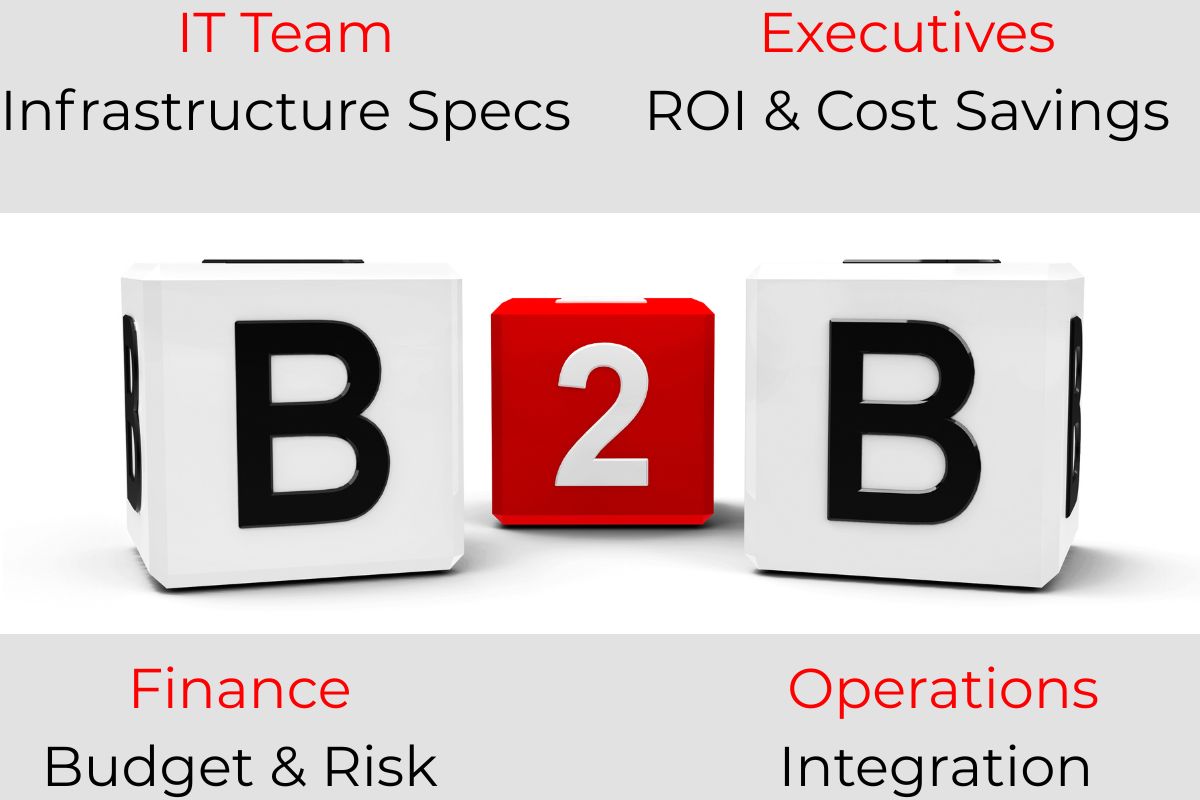
Keep in mind that multiple people are involved in the process of the B2B decision.
Create a detailed page for each of these people
- Infrastructure specifications to the IT team
- An ROI calculator for the executives
- Digitally integrated operations for managers
Then connect them in a manner that is sensible.
This will create a better level of authority, will improve the metrics for engagement along with time spent on the site, and will also improve the buying experience.
The companies that win in competitive B2B spaces are the ones that take a layered, strategic approach to their SEO campaigns.
Approaching the B2B SEO market has a future for growth
Once your campaigns gain traction, scaling becomes the next challenge. Focus on refining your strategy, scaling content production, and strengthening technical performance without losing sight of revenue goals.
- Increasing the breadth of the keywords you are targeting.
- Creating a plan to renew your content that is older than a few months.
- Technical audits.
- Building of links.
The right B2B SEO increases the firm’s overall value, creates a larger net margin, and reduces the net costs for acquiring customers.
The Right Steps To Take:
Effective b2b seo campaigns are built on intent, authority, and alignment with what actually drives revenue. They prioritize qualified traffic, solid technical foundations, and content that supports real buying decisions.
Start by auditing your highest-intent pages. Review your keyword strategy. Fix your internal linking. Align SEO with what sales is hearing.
Then build from there.
Consistency beats shortcuts every single time.
FAQs
Most campaigns start showing measurable improvements around 3-6 months, with stronger pipeline impact between 6-12 months. If you’re in a competitive industry, expect it to take longer.
B2B SEO targets smaller audiences with longer sales cycles and higher deal values. Your content needs to address multiple decision-makers and build serious authority and trust.
Start with intent-focused keyword research, map content to your buyer journey, fix technical issues, and measure revenue-focused metrics. That combination drives real growth.
Service pages, solution pages, comparison content, and case studies typically convert best and should be your top optimization priority.
Absolutely. High-quality, industry-relevant backlinks remain one of the strongest ranking signals, especially in competitive B2B markets.