SEO-friendly blog posts answer search queries, gain visibility, and engage readers without the need to spam search engines with irrelevant keywords. Whether you are a seasoned content creator or a beginner, the ability to write SEO-friendly blog posts is a necessity to attract organic traffic and establish credibility in a field.
This guide will help you with everything, ranging from basic strategies and SEO content writing to advanced optimization methods and actions to take after publishing to ensure you have a way to build blog posts to satisfy search engines and readers with SEO friendly content.
How to Write an SEO-Friendly Blog Post
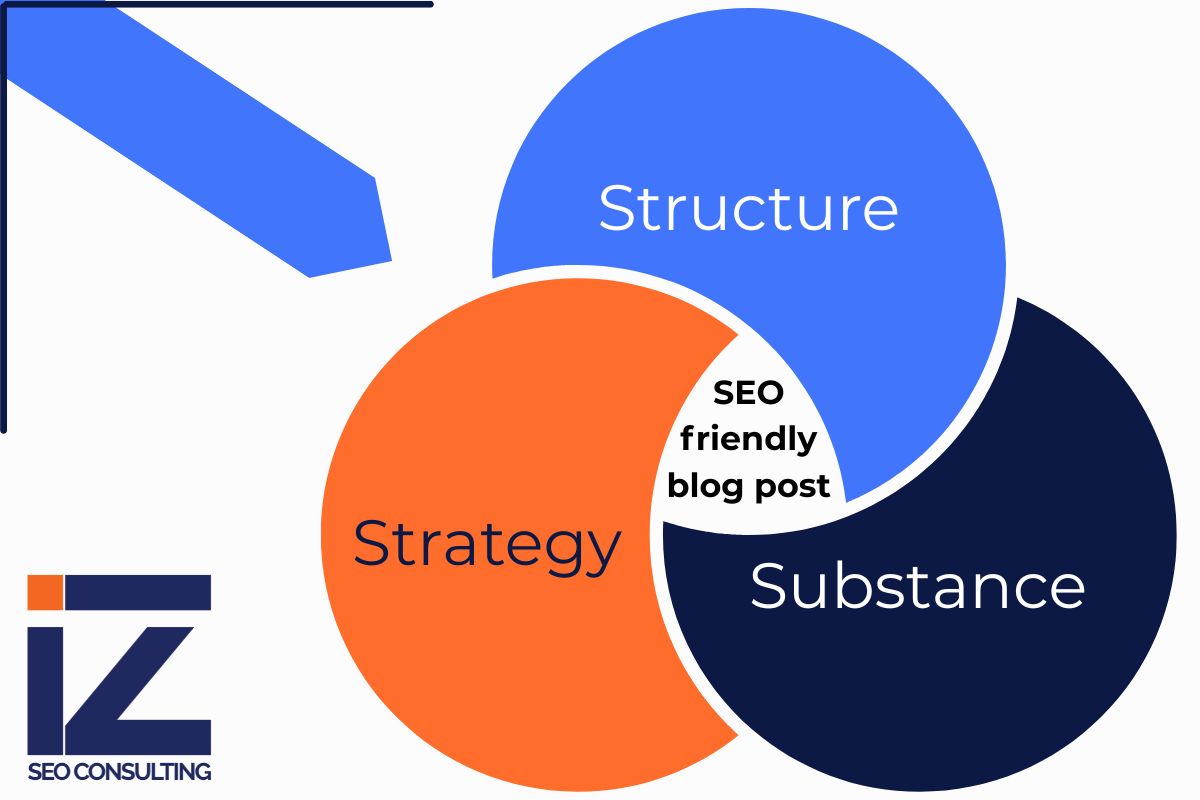
To write blog content that ranks and converts, you need to intertwine three core elements:
- Strategy: Defining your audience, understanding their search behavior, and analyzing the competition
- Structure: Arranging content to be easily digestible and to have a smooth flow.
- Substance: Providing genuine, valuable content that has the depth, expertise, and actionable insight readers are seeking.
When you combine these elements, your content will be optimized for discovery and engagement.
Start With Intent-Driven Keyword Research
Excellent SEO begins well before putting pen to paper. It begins with understanding what the audience is searching for and why. Avoid the guesswork and let data inform your content.
Tools and Methodology
Google Keyword Planner, Ahrefs, Ubersuggest, and Semrush are some tools that can help with research for keywords pertaining to SEO. The tools can help you to:
- Evaluate and choose keywords that are less competitive in relation to their value and associate with your level of expertise.
- Measure and analyze levels of searches and how they change seasonally.
- Evaluate and analyze levels of competition for all keywords, including your target keywords.
- Gain insight into the specific questions being asked through search engines and use that to your advantage with additional keywords that are more specific.
- Associate different keywords with varying stages of the buyer’s journey.
Understanding Search Intent
There are different search motives that can be behind users’ searches when considering the SEO tips for blogs. The motives can be understood in 4 different ways.
- The user wants to learn something. Example: How to write SEO-friendly blog posts
- The user wants to go to a particular page or a site.
- The user wants to buy something and is exploring options.
- The user is willing to buy and take action.
Every piece of content has a dominant intention that can be established without needing further explanation. There are levels of intentions that can be grouped together.
Avoiding Keyword Overuse
Additionally, keyword stuffing is an example of a black hat technique. You can use your main keyword approximately 4 to 6 times per post for SEO purposes and incorporate some contextual variations. Search engines do not like keyword stuffing, and it lowers the overall quality and readability of your writing.
Structure Content for Humans First, Then Search Engines
Search engines have rewarded content that has user-centric (focused on the user) layouts, hierarchies, and logical flows.
Essential Structural Elements
Today’s SEO content marketing follows the same (proven) structure:
- Headlines (H1s) – Optimize your title with your primary keyword for search engines, and for readers, capture some curiosity or offer value. Plan to keep your titles shorter than or equal to 60 characters.
- Introductions – Capture the readers’ attention by addressing their pain point or question. Within the first 100 words, state the most important keyword and give the reader a preview of what your blog is about.
- Sub-headings (H2s and H3s) – Divide your content into different sections and give each section a title or name by creating descriptive sub-headings. Search engines, in determining the hierarchy of your content, will improve your chances of ranking better by including keyword variations in 1-2 of the subheadings.
- Paragraph – Keep paragraphs short—3-4 sentences maximum. Long text blocks discourage mobile readers and reduce comprehension.
- Visual Breaks – To allow for some spacing, use some bold text, lists, or images, in a synthetically strategic way, to give the text some space. Avoid bullet lists if the text is more engaging because your content flows better.
The Importance of Logical Flow
It is important for your content to lead your audience through gradual building blocks of thought. Each subsequent section should be a culmination of what was discussed before in order to create a connected story that captures the audience’s attention to the very end.
Learn the Basics of On-Page SEO
Getting the technical building blocks in place is a must. These components help to establish relevancy in the eyes of the search engines and simultaneously improve the overall user experience.
The Most Important Elements of On-Page SEO
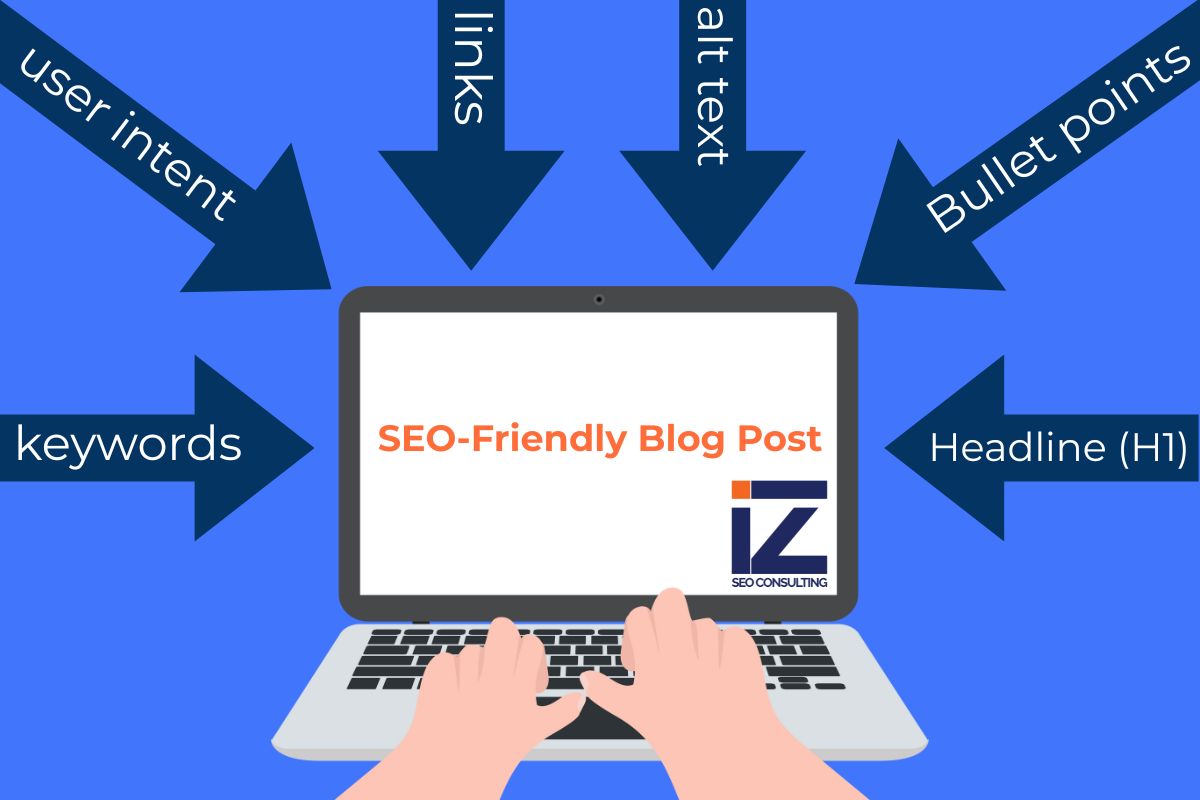
- Keyword Usage: Include the primary SEO keyword for the blog posts (e.g SEO friendly blog posts) 4 to 6 times in a blog. Say the SEO related phrases “write SEO friendly blog posts”, “SEO tips for blog posts”, etc., where they naturally fit.
- Title Tag: Make your H1 title the same as your title tag or very similar to it. Put the primary keyword toward the start of the title as well.
- Meta Description: Try to create a winning meta description in less than 160 characters that has the target keyword and captures attention for clicks. This does not affect ranking directly, but an increase in CTR positively affects a site’s place in the rankings.
- Structure of the URL: Keep the URLs short, tell what the page is about, and contain the target keyword for the page (e.g how-to-write-seo-friendly-blog-posts).
- Internal Linking: Using descriptive anchor text, link to 3 or 5 other relevant articles on your blog. This shares the page rank and promotes a lower bounce rate on the page.
- Outside References: Add links to 2-3 trusted sites such as Moz, Google SEO guidelines, or relevant industry studies. This demonstrates to Google that you have done your research and your content is credible.
- Optimizing Images: Avoid using default file names, such as “IMG_1234.jpg.” Make sure images are smaller to improve page speed and provide alt text that describes the content of the image and is relevant to the keywords you are targeting.
- Header Tags: Each page should have only one H1. Use H2s for the primary sections and H3s for the subsections, in that order.
Focus on Depth and Expertise, Not Random Word Counts
Covering a topic in depth should be prioritized over hitting a certain number of words. Some topics can be completely covered in 800 words, while others can require 2,500 or more. Use as many words as needed to give the topic a complete treatment and stop there.
Demonstrating E-E-A-T (Experience, Expertise, Authoritativeness, Trustworthiness)
This is the fourth iteration of E-A-T, which is meant to gauge the expertise and trust factors for any given query. E-A-T has become more complex, but Google continues to reward the demonstration of real expertise and E-E-A-T, rather than simply claiming it. Show, don’t tell.
- Give examples. Real examples. Say examples of WordPress, Medium, HubSpot, etc.
- Provide personal experiences. Give real experiences. Provide real content rather than other content.
- Back it up. Provide relevant statistics and research. Only in a supportive context.
- Show methodology. Not just what to do, but explain why certain things work, and others do not.
Content that is thorough and takes all sides of the topic to satisfy the user’s intent earns backlinks, and is viewed for extended periods of time, which signals to search engines the quality of content.
The Power of Comprehensive Coverage
Don’t leave obvious questions unanswered. Provide insight into what questions readers may have while reading through your content. This keeps users on your content, and is more satisfying than going to search results and questions.
Common Traps That Sabotage Your SEO Efforts
Even seasoned bloggers stumble on these when optimizing blog posts for SEO:
- Keyword Stuffing: Penalties from search engines can be incurred when there is an unnatural overuse of search terms in a post. Be sure to write fluently first and afterward, and adjust for SEO.
- Disregarding Meta Descriptions: Descriptions that fail to speak to an audience have lower than optimal CTR, as weak or absent descriptions have vacancies that target metrics should be trying to fill.
- Algopop: Dominating search engines is a losing game. Google includes the sophistication of its unexposed algorithms as counterforces to spam, etc. Google will not move a piece that does not serve a purpose.
- Unresponsive: With over half of users accessing the web from mobile devices, you will be losing traffic to the competition if your site is not optimized for mobile.
- Frail Content: Publishing posts that barely touch the key issues related to a topic barely meets the competition for depth in coverage.
- Unintelligent Internal Linking: Balancing links is an art that is not very well developed. A good linking culture will make the site more web-like.
Advanced Techniques
These techniques bring your writing from being good to being exceptional and high-ranking.
Optimize for Search Intent Using Google Search Console
Most bloggers avoid this step. After you publish a blog, monitor your post in Google Search Console to see how it is performing. Look at impressions vs. click-through-rate (CTR).
Did users see your blog, but it had a low CTR? It is likely that the title and meta description do not align with the user’s search intent. deep impressions, low CTR? Someone searching for that blog likely thought your blog was relevant, but the title and meta description prompted them to expect something else, hence the low CTR.
Did a lot of people click on your blog, and it converted to very little? This likely means that the blog title makes a promise that the content fails to deliver. Check what user expectations the blog content are failing to address?.
This user-behavior approach is something very few content creators do, and it is likely to work best.
Topic Clusters
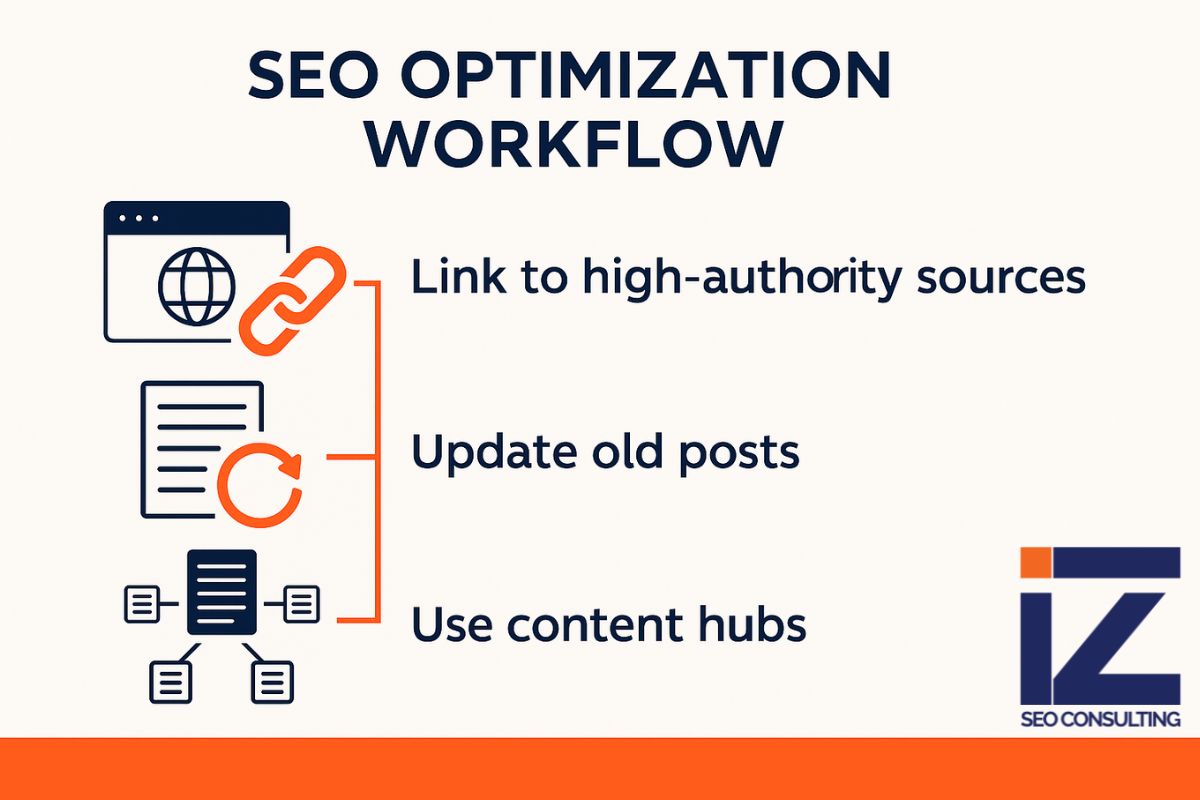
Instead of publishing stand-alone posts, publish content hubs. For a single topic, write several related posts and interlink them. This helps search engines identify you writing on that topic, and it helps people gain a deeper understanding of the topic.
An example could be a pillar post about creating search-optimized content, with links to supportive posts covering keyword research, on-page optimization, and content promotion.
Update and Refresh Existing Content
Once SEO friendly blog content has been published, it cannot be considered done. Evergreen posts require periodic updating:
- Current stats and updated examples
- New sections to address new questions or trends
- Better internal links as new relevant content is published
- Improved content, based on underperforming elements that analytics point to
- Thoroughly expand on sections that others have covered more completely than you
Posts that have been neglected will see a dramatic increase in traffic after one of their regular scheduled, content updates.
Link to High-Authority Sources
Well-placed external links to sources of authority, such as, Moz, Backlinko, or Google Docs can increase the worth of your content by showing that you have made the effort to do real research as oppose to just researching the matter.
Implement Proper Schema Markup
Structured data (schema markup) can make it easier for search engines to analyze and understand your content.
Also, using structured markup can help you to earn rich snippets in search results, which can result in additional snippets showing ratings, FAQs, or how to steps that are more detailed.
Frequently Asked Questions
Google Search Console and Google Analytics are great free options. For more advanced options look at Ahrefs, Semrush, and Screaming Frog for technical audits, keyword monitoring, and competitor research.
These timelines aren’t guaranteed. If posts are new and on high authority domain, valid posts can rank in weeks and sometimes days. If you are dealing with new sites and competitive keywords expect 3-6 months. These timelines can hinge on several factors such as technical SEO, content quality, domain authority, and a couple more.
They do not only have to be natural, they should be. Importing keywords and writing should be a natural flow of things. Drafts should be made for people and optimized for machine.
Optimizing posts can take time, and in some cases it can be a waste of time such as personal posts, low audience posts or niche content. If your content and posts target some traffic and search volume, you should blog for SEO.
Blogs should aim to provide comprehensive information and high-quality content. Other SEO ranking factors include user engagement, page speed and core vitals, and website structure (such as internal linking, mobile-friendliness, appropriate keyword targeting).
In the first draft, write with little to no optimization for keywords. After the first draft, examine your work to find places to incorporate the keywords in a natural way. If a keyword feels forced, miss it, as it’s better to have keywords misses than a forced optimization.
It helps in both maintaining the structure of the site and the distribution of page authority, and it keeps users engaged. Per post, include 3 to 5 internal links, and with anchor text, illustrate what users would find when they click the link.
Take Actions: The SEO Roadmap for the Content
It takes time to write SEO-friendly blog posts, as this is a never-ending process that depends on continuous learning, testing, and the refinement of content based on actual performance data.
Post-Publication Monitoring
As soon as your post goes live, track its success step by step:
- Check position for your target keywords on a weekly basis
- Examine traffic fluctuations and user activity on Google Analytics
- Check Click-Through Rates and Index Position on Google Search Console
- Watch backlinks as they build up
- Assess which areas retain reader interest and which ones make readers loss interest
Two-Step Improvement Process
In the event a post isn’t performing as expected after 2-3 months:
- Evaluate the content of top-ranking competitors; how are they different?
- Complete undersized areas with additional details or examples
- Revise your title and meta description to improve CTR
- Include internal links to related posts to ramp authority flow up
- Revise the data or statistics to reflect the most current information
- Think about changing large sections of content for a different format to improve readability
Improvements made to data over time are often rewarded with increases in the volume of traffic. It is the posts that are constantly adjusted post publication that rank the best.
Best Rule of Thumb
Try to assist your reader instead of “tricking” the algorithm. If your content is useful and your post is well set up, your goals will most likely be hit and your post will rank. Rather improve your content and its readability the best you can to become the best solution for your audience.
Do you need specialized expert advice? Professional assistance from Indexed Zone SEO means you get customized strategic guidance to produce content that ranks, converts, and builds lasting authority in your niche.