Picking a domain name seems straightforward at first, until you realize how much weight that decision actually carries. Your domain affects everything from branding and trust to click-through rates and how well you’ll rank down the road. We’ve seen plenty of websites hit roadblocks years later because they rushed this choice early on.
This guide walks you through how to choose a domain name the smart way, drawing from real SEO experience in the trenches.
How to Choose a Domain Name
The goal here is to find balance. A strong domain name sticks in people’s minds while making sense to search engines. Clarity wins over creativity every single time.
When you’re figuring out which domain name to choose, ask yourself this: What should someone expect before they even click? If your domain sets the right expectation, you’re already halfway there.
A domain that works well typically:
- Gets the topic or brand across clearly
- Rolls off the tongue and types easily
- Skips the gimmicks and keyword stuffing
- Still makes sense five years from now

This thinking applies whether you’re learning how to choose a domain name for a website, launching a business, or starting a blog.
Important Factors When Choosing a Domain Name
Being able to identify what to consider when choosing a domain name can help save you from costly predicaments that are challenging to rectify later on.
Keyword vs Branding: Striking a Balance
In the past, websites with exact match domain names would rank on Google easily. Google now prioritizes websites that have high relevance, trust, and authority over just having a plain URL with plentiful keywords.
There’s no doubt that keywords can provide clarity to a domain, but on the other hand, branding is more important. Websites with memorable and legitimate-sounding names receive more clicks and backlinks, and more return visits.
Consider the domain name, BestCheapShoesOnline123.com. It clearly has keywords, but is spammy. A name that is clean and brand-focused will dominate the competition.
This balance is important when deciding on how to choose a domain name for a business and when thinking about how to choose a domain name for a long-term blog.
Length of Domain Names and How Readable They Are
Generally speaking, shorter is better, but clarity will always take precedence over brevity. A long domain that is easy to read and understand will always outperform a short, obscure, and cryptic domain.
Skip these negatives:
- Hyphens that people might forget or mistype.
- Numbers that may need explaining (“Is that 2 or two?”).
- Creative misspellings that might confuse people.
If you find yourself explaining your domain to people, that is your sign that it is not the right one.
Extensions: .com vs Everything Else
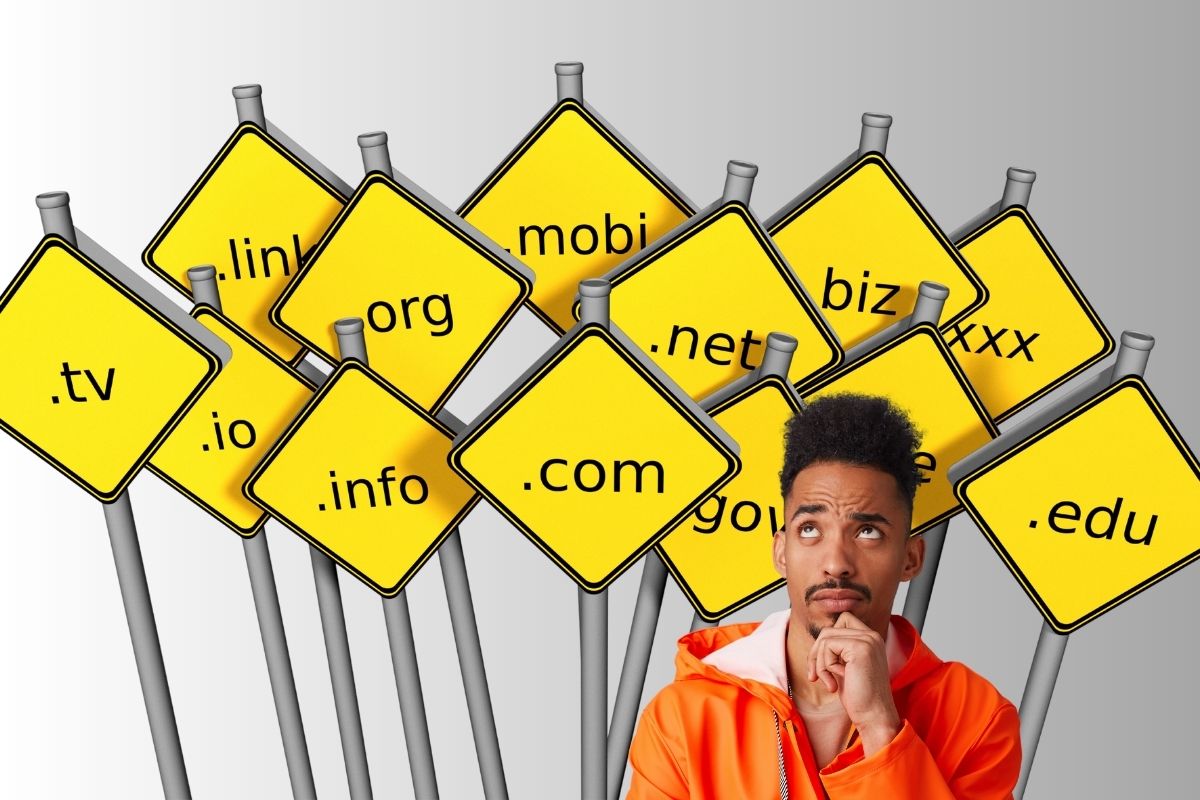
The .com extension is the most trusted; though it is not mandatory, it is generally the safest choice when available.
Other extensions are fine for niche projects, though they do come with tradeoffs. Many users still instinctively type .com, so you may be losing traffic to a competitor.
If someone is already operating an active business running the .com version within your niche, that is a huge red flag. Choosing a similar domain can lead to confusion and legal issues.
How to Choose an SEO Friendly Domain Name
Choosing an SEO friendly domain name is about ensuring relevance and intent, and not trying to “game” the system.
Search engines evaluate domain names within context. A clean name that fits your content helps you establish topical authority in a domain that is new.
It is still important to:
- Avoid spammy and overly optimized words
- Ensure the domain and content match thematically
- Select a domain that will not box you in
A domain that is too focused and narrow exceeds growth potential, and a domain that is too broad and general will be too irrelevant. It is important to find a place in the middle.
These are connected to general SEO ranking factors, like trust and content quality, which matter significantly more than trying to put as many keywords as possible in the URL.
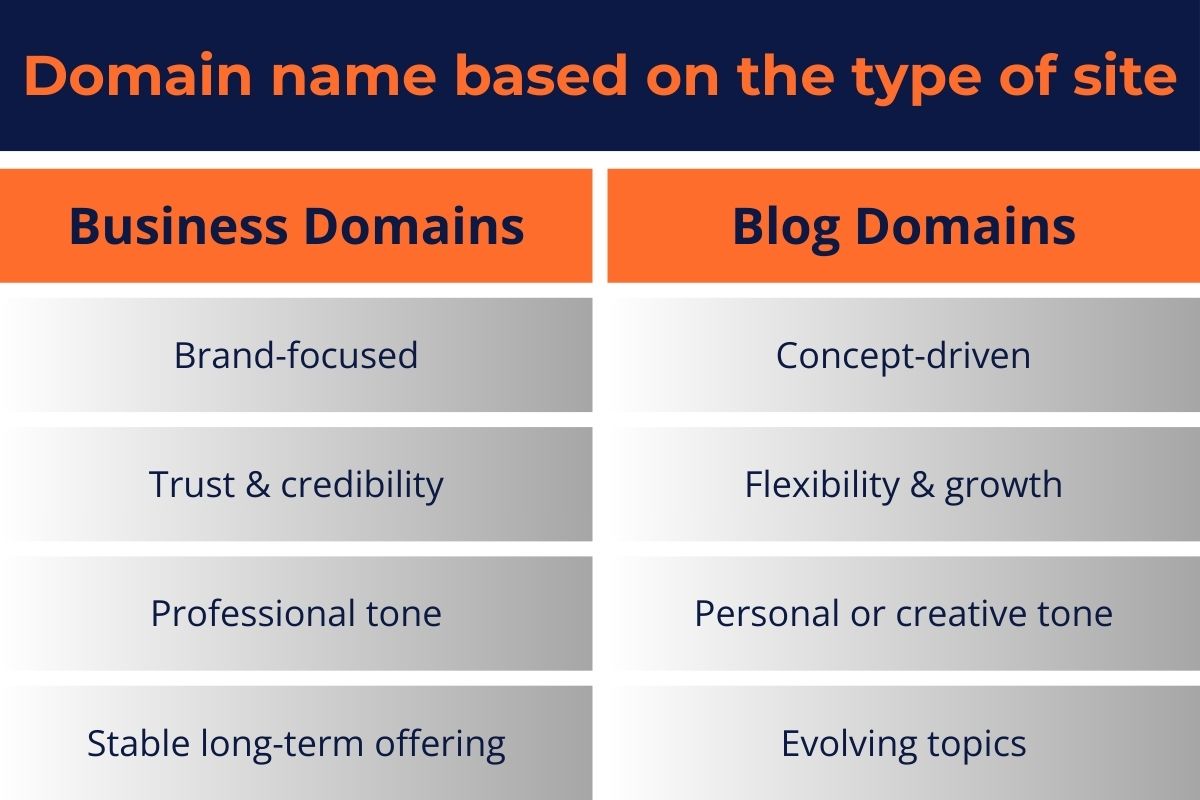
Choosing a domain name based on the type of site
For Services and Businesses
When learning how to choose a domain name for a business, credibility is one of the most important factors. Your customers should be comfortable trusting you with their credit card and personal information.
Business domains are the most effective when they:
- Align with your name or your company does
- They are easily pronounced and sound professional
- Contain no buzzwords or trendy slang that will sound outdated
Local businesses can include location-based keywords if they are remaining local. But if they are looking for a national or global reach, they should not be geographically restrictive.
For Blogs and Content Sites
Choosing a domain name requires a level of breathing room, and this stems from the fact that a topic may shift and interests may evolve over time.
Your blog domain should allow you to shift focus without having to completely rebrand. Concept-driven names, rather than rigid keyword phrases, tend to outperform the competition over time.
Many creators go too specific and end up regretting it, which is where this domain name criticism stems from.
Common Pitfalls to Avoid
Problems usually arise after several months, rather than immediately following launch.
Look out for:
- Purchasing expired domains without looking into their backlink history
- Choosing names that are too similar to competitors
- Overusing keywords that hinder your branding
- Disregarding potential trademark conflicts that could arise and be problematic
Such mistakes are detrimental and complicate the scaling of your site.
One often overlooked aspect is URL structure-content may be great, yet messy internal URLs can severely hinder your SEO. This is where understanding the best URL structure for the specific domain is crucial.
Can You Choose a Domain Name After Building a Website?
Technically? Sure. Worth it? Almost never.
There are real risks associated with changing domains later on.
- Traffic loss during migration
- Loss of backlinks due to broken redirects
- Confusion among returning visitors regarding brand association
Unless undergoing a significant branding crisis or a legal issue, there is no need to skip getting the domain right from the start. Most people are not aware of how costly rebranding is, especially after your content has begun ranking and acquiring backlinks.
Pro Tip: Most Skip Domain History Check
Some insider techniques are rarely shared.
- Before purchasing any domain, make sure to verify
- Archive history on the Wayback Machine
- What the site previously hosted
- Patterns of old backlink anchor text
A domain may appear to be perfectly fine, but might carry a history. Previous content that is unrelated or spammy can hurt the trust that search engines have in you. This single step is absolutely critical in optimizing workflow and has the potential to save countless hours cleaning up a poor domain afterwards.
Domain Names and Long-Term Search Performance
While your site may not rank according to the domain name alone, it certainly lays the groundwork on which everything else will be built.
There is a consistent pattern to how trust is earned. Segmenting a domain and delivering quality content will improve your SERP ranking and search engine visibility over time. This will also indirectly affect the impact of several variables of user engagement.
Once you’ve secured that domain, the more substantive work of content creation, internal link building, and relevance elevation for search engines begins. Your domain facilitates that process, but does not supplant it.
For a more detailed, strategic type of work, see Indexed Zone SEO and our Keyword Research guide for how to integrate domain recommendations with the other aspects of your SEO strategy.
FAQ
Once is plenty, and honestly, zero is fine too. Branding and clarity trump keyword repetition every time.
Only marginally. It helps with relevance and trust signals, but your content and backlink profile matter way more.
Only if they sound natural and fit a real brand. Forced exact matches typically underperform nowadays.
It’s risky and should be your last resort. Only do it if there’s absolutely no other option.
Not inherently, but user trust and click behavior still tend to favor .com domains.
Wrapping It Up: Final Selection is the Most Important One
Choosing how to name a domain is not about manipulating the algorithm. It is about establishing a clear user and search engine message from the outset.
Clarity, trust, long-term fit. Don’t take shortcuts. Don’t just think about the first week post-launch.
This is a one-shot deal. Do it right, and everything you develop or design later will integrate with this foundational work seamlessly.
Several best practices when deciding on a domain name involve keeping it memorable, avoiding difficult spellings, hyphens, numbers, and trying to try and prioritizing the .com extensions. Furthermore, alignment with the name/topic of the brand is important, and checking for legal trademark issues, along with verification of the domain’s history, is encouraged. Finally, confronting the decision with a long-term mindset is important. Your domain name should age with you and still make sense years down the road.