As we know, the search landscape has changed a lot. The most relevant and valuable pages in the search results will go unvisited. Ensuring your pages rank for ‘no-click searches’ has gone from a novel use case for SEO professionals to a fundamental part of their strategy. Featured snippets and search result pages are redefining the term visibility in search. In this article, I will explain what is taking place, how to interpret the apparent loss of traffic as a brand strategy, and, most importantly, why this is valuable to your business.
Why “zero click” matters and what it actually means
The easiest way to summarize a zero-click search is: a user queries Google, an answer is provided by the search engine results page (SERP), and the user does not visit the website. In this case, there are zero clicks, zero visits, and zero revenue.
As with most trends, the data is clear: In a 2024 study, 58.5% of Google searches in the U.S. were zero-click searches, and this number rose to 59.7% for search queries in the European Union (Sparktoro, Intelligency Group, and Search Engine Land).
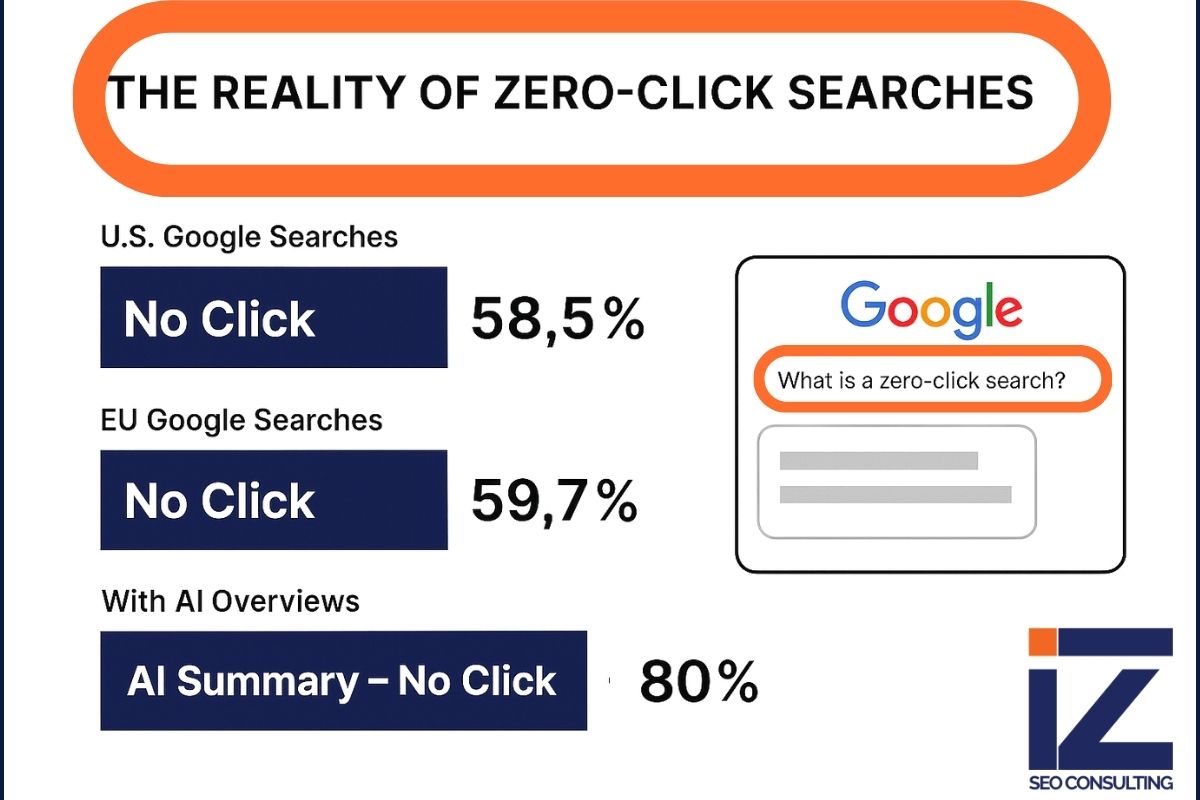
As AI Overviews show up in the results, the zero-click rate rises to nearly 80% of the time, according to Similarweb.
The truth is, although you might have a strong ranking, users will not visit your site if they have found what they were looking for previously. However, there is a positive outcome for companies that are willing to change. If you adjust your SEO strategy for no-click searches and recommend investing in featured snippet searches, pages you previously had to let go of will be useful.
How to adjust your strategy for featured snippets in SEO
Adapting to this shift means we need to stop obsessing over rankings alone and start thinking bigger about content structure, visibility, and how users actually behave. Let me break down how to build a solid featured snippet SEO strategy that works in today’s landscape.
What Is a Featured Snippet in SEO (and Why You Should Care)
Featured snippets are answer boxes at the top of Google search results, above the organic listings. Search Engine Journal states that snippets are important because:
- You gain “zero-click” visibility, which is significant when over half of all searches go without a click.
- You are the first answer users see, even if they do not click on your link.
- Your brand gains visibility and credibility.
Key Steps for Optimizing for Featured Snippets and Zero-Click
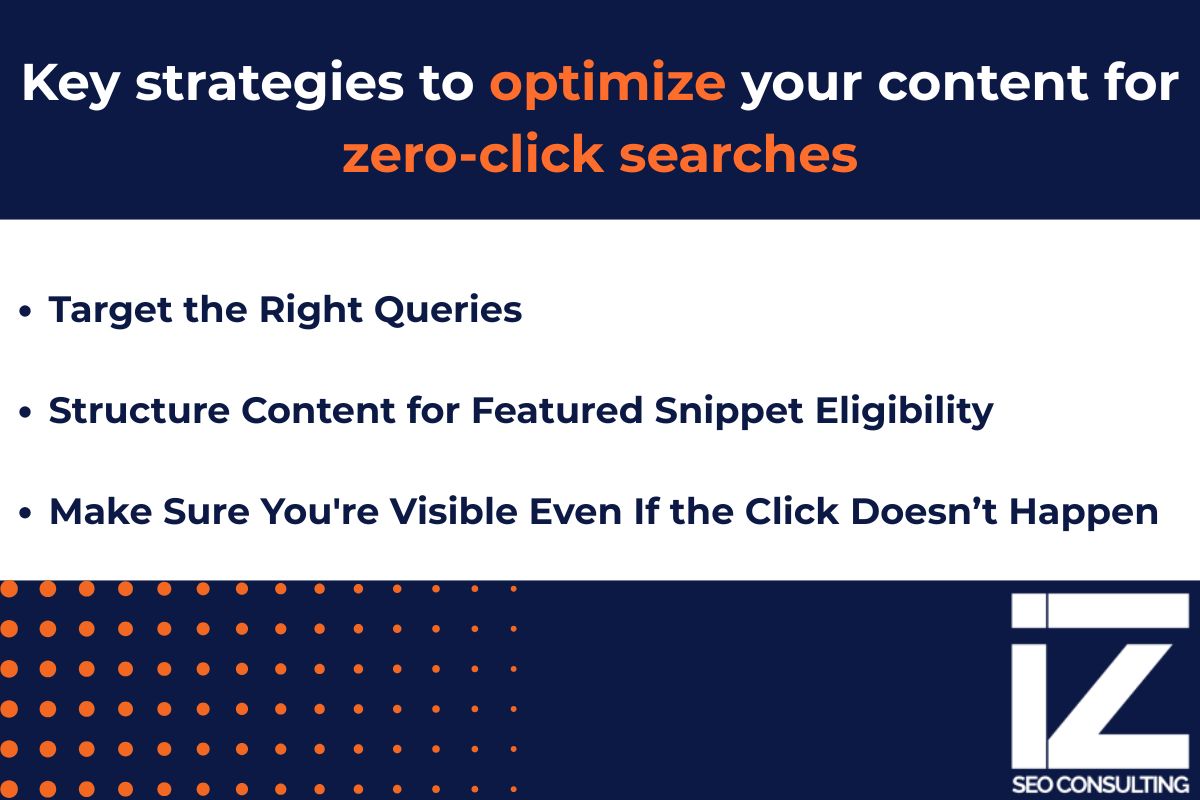
1. Target the Right Queries
The most rapidly changing search behavior is the zero-click type. These are the informational searches, where the users will simply ask a question (e.g., what, who, why). Discovering the search behavior will help you to utilize featured snippets and “People Also Ask” boxes. If you see a search behavior with a strong transactional element, it is likely that your users will have to complete an action such as clicking a button.
2. Structure Content for Featured Snippet Eligibility
An example of a good heading is a question-based type, such as “What is a zero-click search?” Then, simply provide a direct answer to the question in the range of 40-60 words. You can add additional information in that section.
Be sure to match Google formats for different types of queries. If search results for a particular topic return a list, then use a list. If they return a table, then create a table. Build structured data (add FAQs, markdown for Q&As, etc). Keep technical SEO (page speed, mobile-friendly design) to give Google a reason to trust your site to show it.
3. Brand Visibility is Important, Even Without a Click
Website Builder Expert data shows users who don’t click often return via a branded search or a direct visit. Make your brand name clear in your content and metadata, and arrange your pages in a way that encourages internal linking, clear calls to action, and related content.
Start tracking what could be termed ‘secondary conversions’: branded search, direct traffic, and returning visitor growth. Given the era of search centered around no-clicks, secondary conversions are proving more valuable than primary conversions.
Pro Tip
Something most SEOs don’t do is look for queries that have recently become zero-click from new AI Overviews or changes in the snippet. When you find one, look for long-tail queries that have not been impacted by the SERP. You are getting ahead of the trend before the zero-click saturation.
This small habit separates good SEO from great SEO, and it’s worth building into your regular workflow. If you want help putting it into practice, Indexed Zone SEO specializes in exactly this kind of advanced strategy.
Common Pitfalls and How to Avoid Them
Mistake 1: Considering Zero-Click Searches as Missed Opportunities
Not every non-click is negative. Your brand being shown in the SERP builds brand awareness and trust, even if they don’t visit your site. It is important to steer the conversation from traffic volume to visibility and influence.
Mistake 2: Misunderstanding Engagement and Prioritizing Keywords
Not every query should be treated the same way. Some searches are transactional, and users still need to click through to complete an action. Others, like unit conversions or quick definitions, are so simple that Google answers them directly and no one is ever going to click. Similarweb’s research confirms this. Knowing the difference helps you focus your efforts where they actually count.
Mistake 3: Not Measuring Downstream Impacts
When CTR is the sole point of measurement, you are not seeing the full picture. It is also important to consider when and how often your site shows up in the SERP features, watch the branded search volume over time, and the number of direct site visits. That is the number of times the presence behind a no-click search is providing momentum.
Priority Actions
When you are ready for immediate implementation of the above strategies, here is your first move.
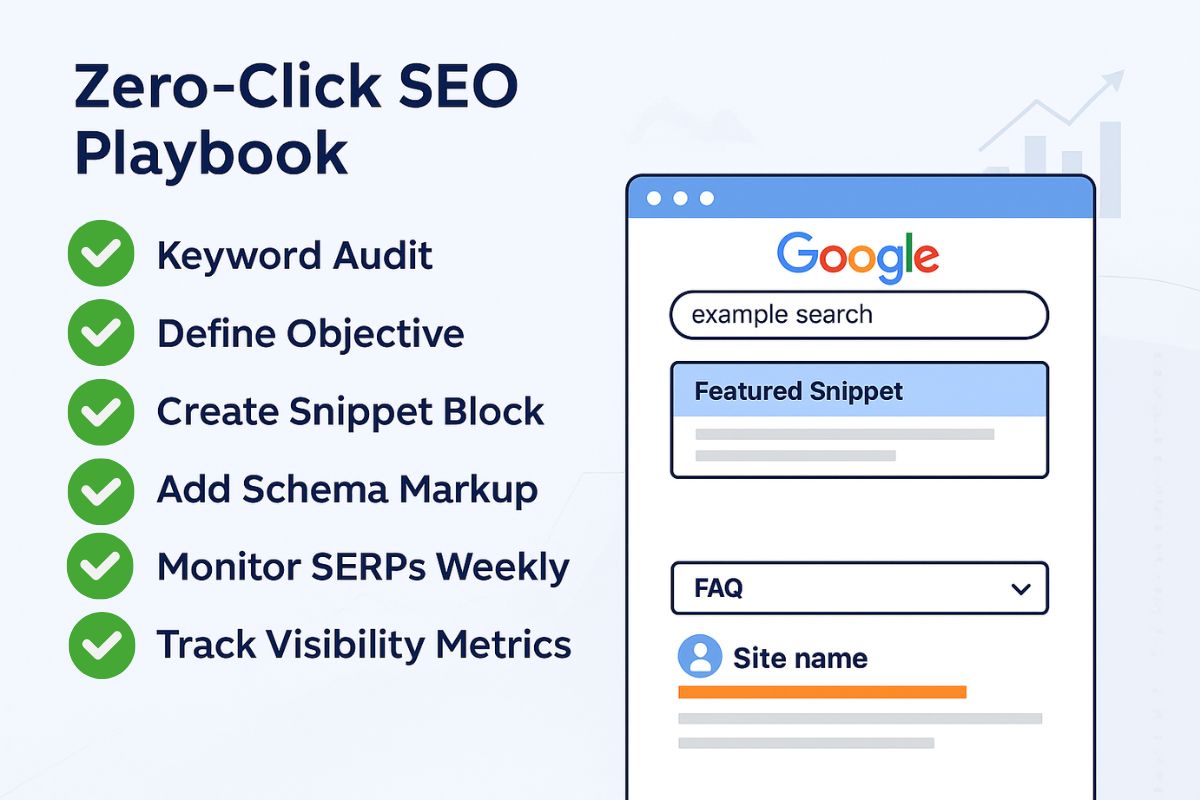
- To improve success metrics, monitor the SERP presence and brand impressions in addition to traffic. Make sure to understand the more advanced SEO metrics, beyond just the clicks.
- Review your keyword list and estimate which queries are likely to result in zero-click searches and which are likely to drive direct traffic. Then, for each entry, you must decide the approach: optimizing for clicks or optimizing for visibility in the snippet.
- Create a “snippet block” and place it in the additional relevant sections of the content. Use a question as a head and provide concise answers, and details of that supported response below.
- Use FAQ or Q&A structured schema markup as it is appropriate.
- Adjust content as needed based on focused queries with featured snippets or AI Overviews by checking SERPs weekly.
Wrap-up: Next Steps
Utilizing zero-click data and adapting your SEO strategy for zero-click searches is not about losing traffic, but about remaining relevant and credible even if users are not visiting your site.
Three immediate actions you can take are:
- Find out which of your existing queries have zero-click searches.
- Adjust your content strategy to try to win a position in featured snippets and other SERP components.
- Use the relevant visibility metrics to measure the comprehensive impact of your SEO.
Adjusting your strategy to zero-click SEO will keep your business visible in searches, even if users do not click through. The best strategy for your business is to remain visible and trustworthy, and to be relevant when it matters. For a more comprehensive approach to getting sustainable organic results, consider these methods to improve your website’s organic traffic.
FAQ
A zero-click search is when a user finds the information they are looking for straight on the search results page, without clicking through to any of the links. This can happen because of featured snippets, knowledge panels, or AI overview boxes.
Since most searches end without a click, measuring site visits by traffic metrics is not a complete story anymore. Capturing a zero-click search by appearing in a featured snippet SEO or other SERP features, keeps your brand front and center, even if users do not visit your site.
To win at SEO for no-click, focus on these moves:
Hunt down high-intent informational queries.
Structure your content to directly answer questions.
Use clear H2/H3 headings with concise answers right below them.
Add schema markup to qualify for SERP features.
Understanding SEO terminology will help you better grasp how Google picks featured content.
They can—if you ignore them. But smart adaptation means you’re still gaining visibility, trust, and brand recall. A strong SEO featured snippets approach keeps your site top of mind, which supports conversions down the road.
Absolutely, yes. Modern SEO includes strengthening your brand and boosting visibility even in non-click environments. Zero-click doesn’t mean zero value; it means rethinking how we measure success.
Move beyond clicks. Start monitoring:
SERP presence and snippet rankings
Growth in branded search volume
Direct and return visits
Broader SEO metrics like impressions, engagement, and brand life