An average of 68% of online journeys start with a search engine, while social media is the driving force behind more than 71% of the buying decisions people make. According to BrightEdge, search engines, in general, bring more than 1000% search engines in comparison to social media, contributing to 53.3% of the website traffic, while social media drives only about 5% of the traffic.
These numbers highlight the core tension of the Seo vs Social Media Marketing debate in eCommerce.
Search engines are amazing at driving traffic with a clear intention to purchase, while social platforms create and foster relationships with a brand over time, leading to a purchase.
These are arguments from both sides of the Seo vs Social Media Marketing debate.
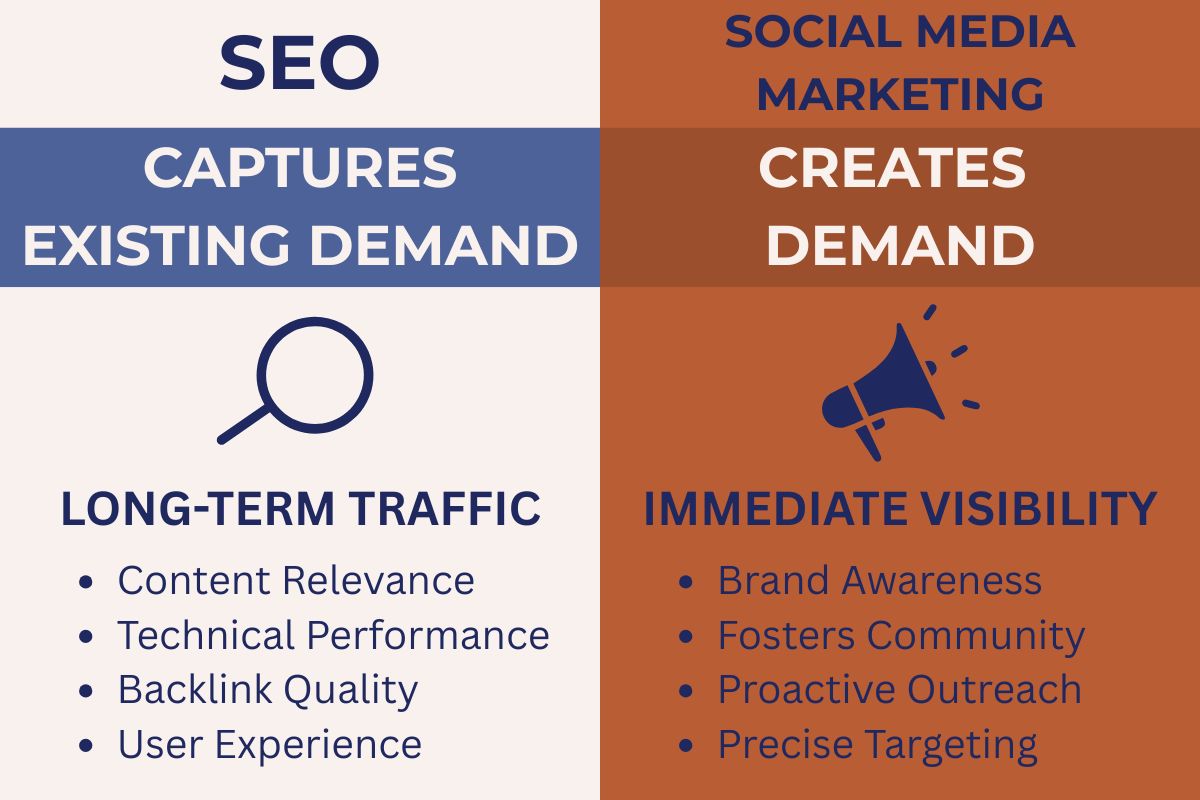
On the one hand, SEO marketing is about demand capture. SEO works with a pre-existing demand through a purchase-related query. On the other hand, social media marketing is about demand generation. Social media works with visibility and engagement to create a demand.
It is crucial for store owners to understand the importance of balancing both sides of the equation for the business to grow, and not just survive.

The Fundamental Difference Between SEO and Social Media Marketing
The difference between social media marketing and SEO is the way the audience finds the content.
SEO (Search Engine Optimization) strategies involve “demand capture” tactics, aimed at individuals searching for problem-solving solutions.
Social media marketing creates demand “in the wild” by placing brands in front of users who may not be searching, but who the brands want to reach.
SEO: Driving Traffic Over Time
SEO means understanding and optimizing for the factors a search engine uses to rank and position a website in search results, including:
- Relevance and depth of content
- Technical aspects of website performance
- Quality and quantity of backlinks
- Signals of user experience
If done correctly, SEO is a long-term and reliable traffic generator that keeps bringing in new visitors after the original optimization is completed, the most important being buying intent of that audience, as search engine users need the products offered by the site.
Social Media: Enhanced Visibility
Social media services are the best for community building and brand awareness, and social media can reach future customers through campaigns, rather than only using the reactive strategies that SEO provides.
One of social media’s best attributes is the ability to provide immediate results; In as little as a few hours, a well-designed social media marketing campaign can drive an enormous amount of traffic.
Social media also provides marketers with far more refined audience targeting than SEO; social media marketers can target an audience with specific demographics, interests, and purchase behaviors.
Which is Better: SEO or Social Media Marketing?
There is no one answer to the question: Is social media marketing better than SEO? This really depends on your unique situation.
Factors to Consider:
Business Model
E-commerce and dropshipping businesses often see better ROI due to search-focused intent.
If someone types in “best wireless headphones under $100,” that is a definite purchase intent to capture with SEO.
The social media vs. seo marketing analysis shows that for visually-oriented businesses (when your products are easy to “show off” and there is a good community around your brand, strong brand, and visually appealing products). Home lifestyle, decor, and fashion brands do particularly well on social media, especially on Instagram and Pinterest.
Resource Investment
SEO is a disciplined and sustained long-term activity, especially in the first three to six months, and requires a lot of good quality content to be built, do technical optimizations, and build links.
When good rankings are achieved, they usually last for a considerable time with little effort on your part.
In social media, there are no good long-term parking spots for your content. Instead, you are going to need to produce a lot of content to see any of that social media engagement. If you don’t post regularly, your engagement will quickly dive to nothing.
Traffic Quality
When it comes to social media vs SEO, traffic is often of a different quality.
SEO traffic often converts better because they are specifically looking with their inquiry (searching) for a social media post.
Social media traffic, while less likely to result in immediate purchases, offers greater potential for building brand awareness and remarketing.
In an ROI, speed, effort, and conversion quality comparison of SEO and social media marketing, SEO checks all the boxes, while social media gets marked for effort and speed.

Mapping SEO and Social to the Customer Journey
The See-Think-Do-Care framework (Avinash Kaushik) illustrates the role of social media and SEO.
- See – Social media is the dominant channel for awareness among the broadest audience.
- Think – The role of SEO is stronger at this stage for consideration and research.
- Do – SEO is most effective at capturing the intent for conversions and purchases.
- Care – Social media is great at nurturing loyalty and retention.
It’s crucial to use both social media and SEO for the best outcomes.
How to Determine the Right Mix for Your Business
Determining the best marketing strategy requires consideration of the specific business context when deciding the role of social media versus SEO.
Audit Current Performance
Before spending resources, take stock of the current traffic sources.
Which channels are generating the most visitors? Which channels are generating high sales conversions? From where are the most profitable customers coming?
This baseline information is essential to guide the focus of marketing efforts going forward.
Analyze Competition
Investigate competitors to figure out their traffic strategies. Using Ahrefs or SEMrush, we can find out
- The keywords competitors rank for
- How much engagement they receive on social media
- How traffic is divided among various channels
Businesses often find new opportunities where competitors are underperforming.
Consider Product Lifecycle
The social media landscape provides quick visibility for product launches; however, for already established products looking for visibility, search engine marketing is often a better option.
For a better-balanced approach during a product lifecycle, the following recommendations apply:
- Launch: Focus social media marketing around product awareness.
- Growth: Merge both social media and search engine marketing.
- Maturity: Focus on search engine marketing for sustained traffic.
In e-commerce, the best operators understand the value added of integrating social media and SEO in marketing and implement the necessary strategies for both channels to reinforce one another.
Maximizing the Benefits of Both Social Media and SEO in Marketing
In the development of cornerstone content to address a valuable search engine query, there is an opportunity to create content in other social media channels in an integrated manner.
How to guide on your website? Make an Instagram carousel.
Product comparison? YouTube video.
In-depth analysis? Create a Twitter thread.
This content-maximizing approach provides reinforced messaging across social media and search engines.
Cross-Channel Amplification
You can use social media to help improve SEO by:
- Encouraging new site visitors to create positive site traffic signals.
- Creating new online relationships that can provide positive backlinks to your site.
- Enhancing visibility and engagement with your content.
You can also use SEO techniques to improve social performance by:
- Using identified SEO keywords to create an effective hashtag strategy.
- Utilizing SEO to create timely social media posts based on trending search queries.
- Using SEO to understand social media audience questions that you can address in your posts.
Pro Tip: The Hidden Traffic Multiplier
Most marketers miss an important point: you can optimize search within each social media platform.
Most marketers focus on Google and ignore searches on social platforms. YouTube gets more than 3 billion search queries a month, and Pinterest gets over 5 billion queries.
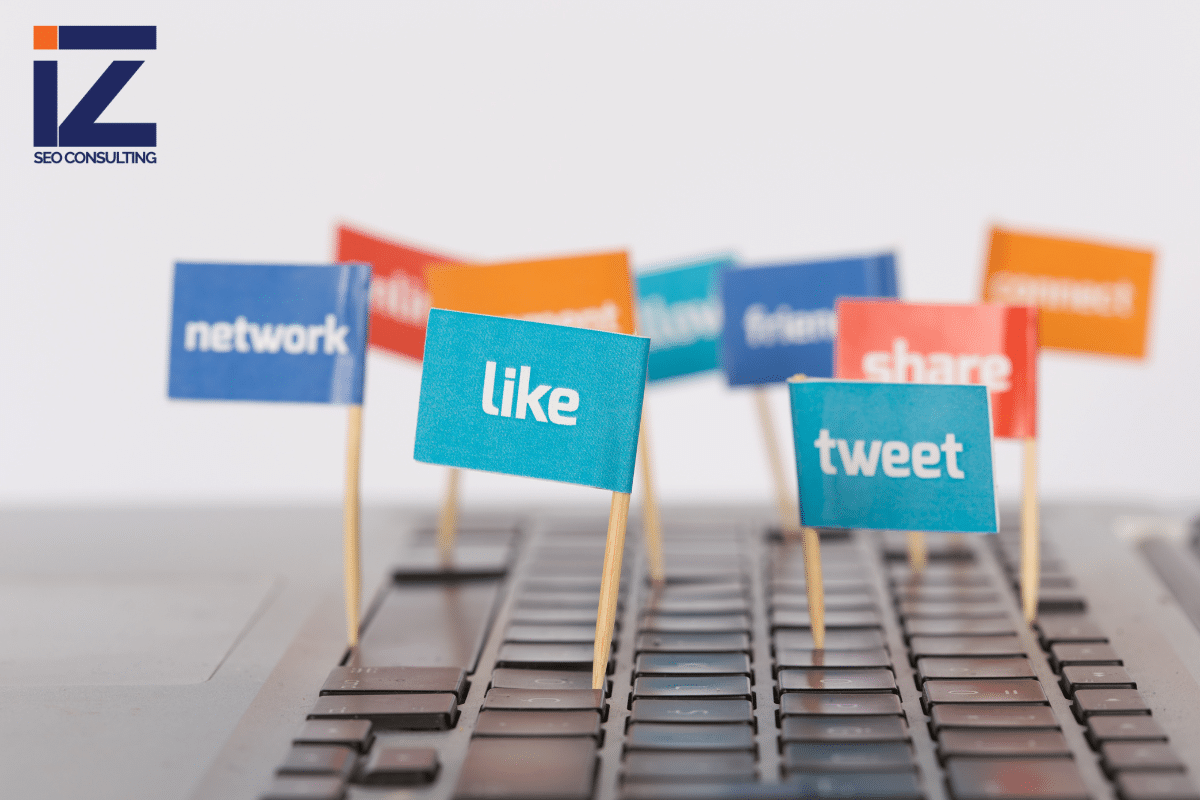
You can enhance your social media posts by:
- Writing caption content for Instagram that is keyword-rich.
- Creating Pinterest pins with descriptions that are search optimized.
- Using keywords in the title and description of your YouTube videos helps improve search visibility.
When you understand the difference between SEO and social media marketing in this way, you can treat social platforms as extra search engines, helping to capture traffic from both social and search.
Emerging Trends That Can’t Be Ignored
The faster companies adjust to changes in the business digital landscape, the better they perform.
AI Changes How Users Search: Search engine optimization strategies must adapt to new AI-powered responses to user queries (e.g., Google AI Overviews and SGE).
Social Media Search: Because TikTok and Instagram are popular with the GenZ and Millennial age groups, they are critical for new user acquisition, and they, along with YouTube, are the search engines that consumers go to for new content. YouTube is actually the 2nd largest search engine in the world.
Less Organic Reach: With the continued throttling of visibility through social search engines, the pairing of paid and organic is required to achieve meaningful results.
FAQ
SEO strategies take far longer, typically 3 to 6 months, to produce significant traffic changes than social media marketing campaigns. In contrast to SEO, social media can produce results within hours or days. However, search engine optimizations (once established) do not require continuous and active effort to maintain or improve rankings.
SEO can lead to greater ROI in the long run due to its ‘evergreen’ characteristics, and the fact it tends to lead to greater conversions due to ‘search intent’. Social media ROI is often greater in the short term; it does great things for brand recognition and can build and maintain great customer relationships. For e-commerce, the greatest ROI is often seen from employing both channels together for the greatest strategic impact.
Declining organic reach means that for your content to gain any kind of traction, your brand will need to invest in paid media. Organic social is important for community management and retention, but more and more, acquiring new customers is going to require paid social.
The best of both worlds is combining targeted paid initiatives with robust organic content creation.
Mobile users account for more than 60% of traffic and impact both of these channels. For SEO, because of mobile-first indexing, optimizing for mobile makes a greater impact on your rankings.
Because of mobile users, social media users tend to engage more but spend less time on each visit. For social media, this means you need to invest more time in strategies that present your content in a more concise, visually compelling way.
Local businesses derive the most value from LOCAL SEO optimization that targets “near me” queries with a high likelihood of conversion. Social media marketing facilitates this by fostering a sense of community and promoting local offers.
In most cases, local businesses should spend 60% of their budgets on local SEO and 40% on social media marketing, especially on the platforms that their local audience uses.
In small businesses, one digital marketer with the right experience can handle basic social media and SEO simultaneously. As a business grows, however, the intricacies of advanced SEO and the social media strategies become more demanding and often require separate resource allocations.
Make the Strategic Choice for Your Business
When deciding between social media marketing and SEO, the most effective approach tends not to favor only one. The most relevant question isn’t which channel generates more traffic, but which combination optimizes outcomes for the business.
Assess your most immediate needs – if cash flow is tight, start with whichever channel is most likely to offer quick conversions. In most e-commerce cases, this means starting with some paid social to drive immediate visibility while you start building the foundations for long-term growth with SEO.
Remember that traffic in itself is not an indicator of success. In the end, it is the quality of the visitors and the extent to which they align with your goals that will determine which channel deserves more budget allocation. In time, goals will shift as the business grows, and so will approaches. Your data will tell you what needs to be done, so analyze it with those changes in mind.
Finally, those businesses that want to be guided by an expert in this steady approach can consult professionals. Indexed Zone SEO develops well-balanced plans. Their plans integrate tested components for the improvement of your organic traffic with custom, targeted optimization strategies, including comprehensive SEO keyword research, to create an optimal growth environment that combines the best of both channels.