When business owners want their websites to show up on Google and attract the right visitors, understanding on-page SEO elements serves as an excellent starting point. On-page SEO involves improving each page on a site so that search engines understand it and users enjoy their experience.
In simple terms, good on-page SEO elements form the foundation of online visibility. They make content discoverable, ensure users stick around, and give businesses a chance to grow without constantly paying for ads. Even the best content can go unnoticed if it isn’t optimized the right way.
For those serious about improving their online presence, Indexed Zone SEO can help build a strong foundation using proven on-page strategies.
What Is On-Page SEO and How It Works
Starting from the beginning, what is on-page seo? It means optimizing the content and structure of each page on a website to help it rank better in search engines like Google.
When people discuss SEO, they often refer to things like backlinks or social media signals. But on-page SEO elements are equally important. These include elements that can be controlled directly—like page titles, headings, text, images, and links.
To put it simply, when someone seeks an on-page SEO definition, they’re talking about everything that happens on a website, not off it. Google wants to show users the best, most helpful results. That means it examines every part of a page: What’s the title? Does the content answer the user’s question? Are the images optimized? Is the page easy to read on a phone?
That’s how on-page SEO works: by ensuring every element on the page is clean, clear, and useful. If search engines can understand content better, they’ll be more likely to show it to users. And if users enjoy the content, they’ll stay longer and may even take action, like filling out a form or making a purchase.
The AI Shift: How On-Page SEO Is Changing
Search in 2025 is no longer just about ranking for keywords. With Google’s AI Mode and generative AI tools shaping how users see results, on-page SEO elements have taken on new meaning.
AI doesn’t just scan for keywords—it looks for context, clarity, and semantic structure. Pages that answer questions directly, use logical headings, and provide complete explanations are far more likely to appear in AI-generated summaries. That means on-page SEO factors aren’t just about ranking in blue links anymore; they’re about being recognized by AI systems as a trusted, useful source.
In practice, this means content should be well-structured, human-friendly, and machine-readable. Think of it as writing not only for visitors but also for the AI that interprets content. If pages are easy for AI to summarize, they’ll also be easier for people to understand, and that’s a win-win.
Importance of On-Page SEO
Why is on-page SEO importance a critical factor if businesses are already posting good content or running ads? Because without proper on-page SEO elements, even great content can get buried under a mountain of other pages.
The on-page SEO importance comes down to two big goals: visibility and experience.
First, visibility. On-page SEO tells search engines what a page is about. Without clear signals like well-written headings, optimized titles, or keyword-friendly content, pages might not show up when people search for topics they cover. Business owners can learn more about this by checking out the most common ranking factors that affect their sites.
Second, experience. This SEO strategy also improves how users feel when they land on a site. A fast-loading page, clean layout, helpful images, and strong calls to action can keep users engaged and lower bounce rates. That’s a signal to Google that the site is worth ranking higher.
The importance of on-page SEO also shows up in how sites perform long-term. When pages are optimized, businesses don’t have to constantly rely on ads to get traffic. Organic clicks are free, and they convert better because they come from people who are already looking for what companies offer.
For those just starting out or unsure how to move forward, on-page SEO elements represent one of the smartest areas to focus on. They give control over content and structure, and they’re something that can be improved right away, without needing technical skills or a big budget.
Most Important On-Page SEO Elements
To boost rankings, it helps to know the most important on-page SEO elements. These are the things Google looks at first when deciding how useful a page is.
Here are the on-page SEO factors businesses should focus on:
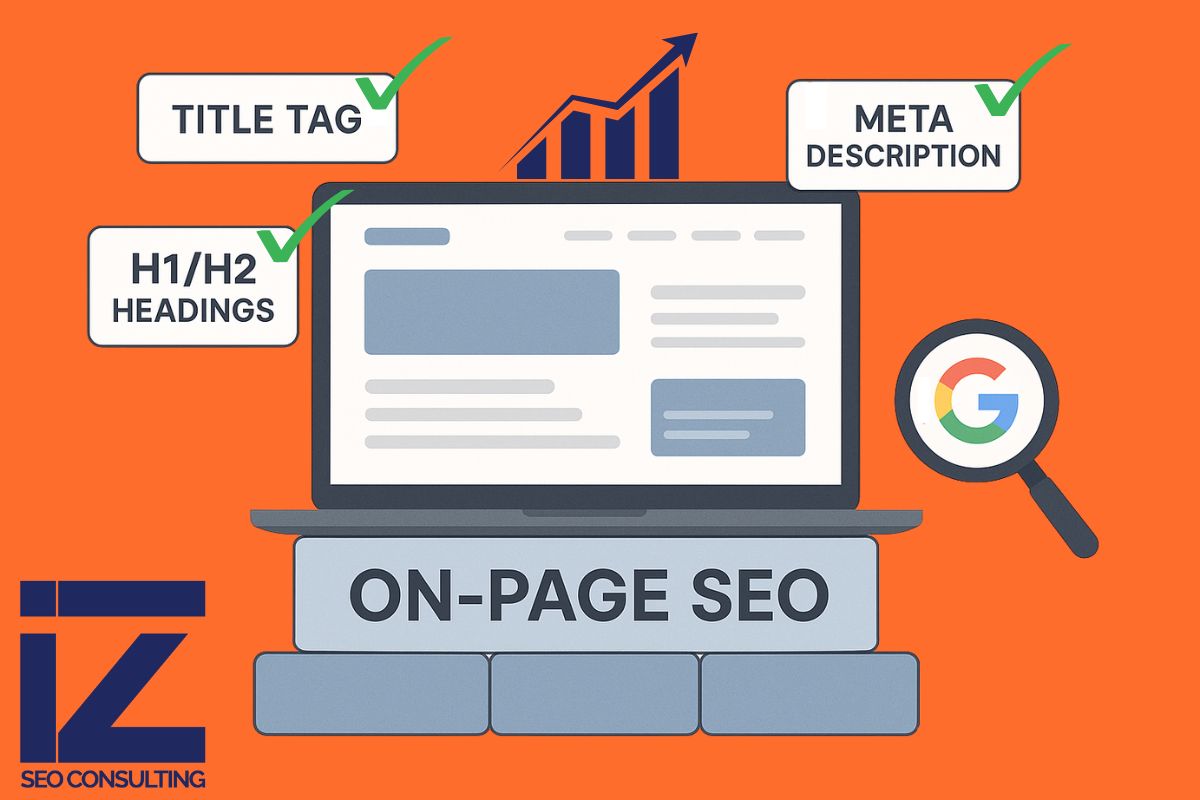
- Title Tags: These show up as the clickable link in search results. Every page needs a unique and clear title that includes the main keyword.
- Meta Descriptions: This short snippet under the title tag gives people a reason to click. It should be clear, relevant, and easy to read.
- Headings (H1, H2, H3…): These break up content and help both users and search engines understand structure.
- Content Quality: Content needs to be useful, accurate, and original. This is where on-page SEO factors really shine. A well-written article or page will always perform better in the long run.
- Internal Linking: Link to other relevant pages on the site to guide users and help search engines find content more easily.
- URL Structure: Use short, simple URLs that include the main keyword if possible.

To dive deeper into writing good content, check out this guide on how to create search-optimized content. Even small changes—like adding keywords to headings or improving meta descriptions—can make a big difference.
Other Key Factors to Know
Besides titles and content, there are a few more on-page SEO factors that are just as important. These might not be the first things people notice, but they still affect how well sites perform.
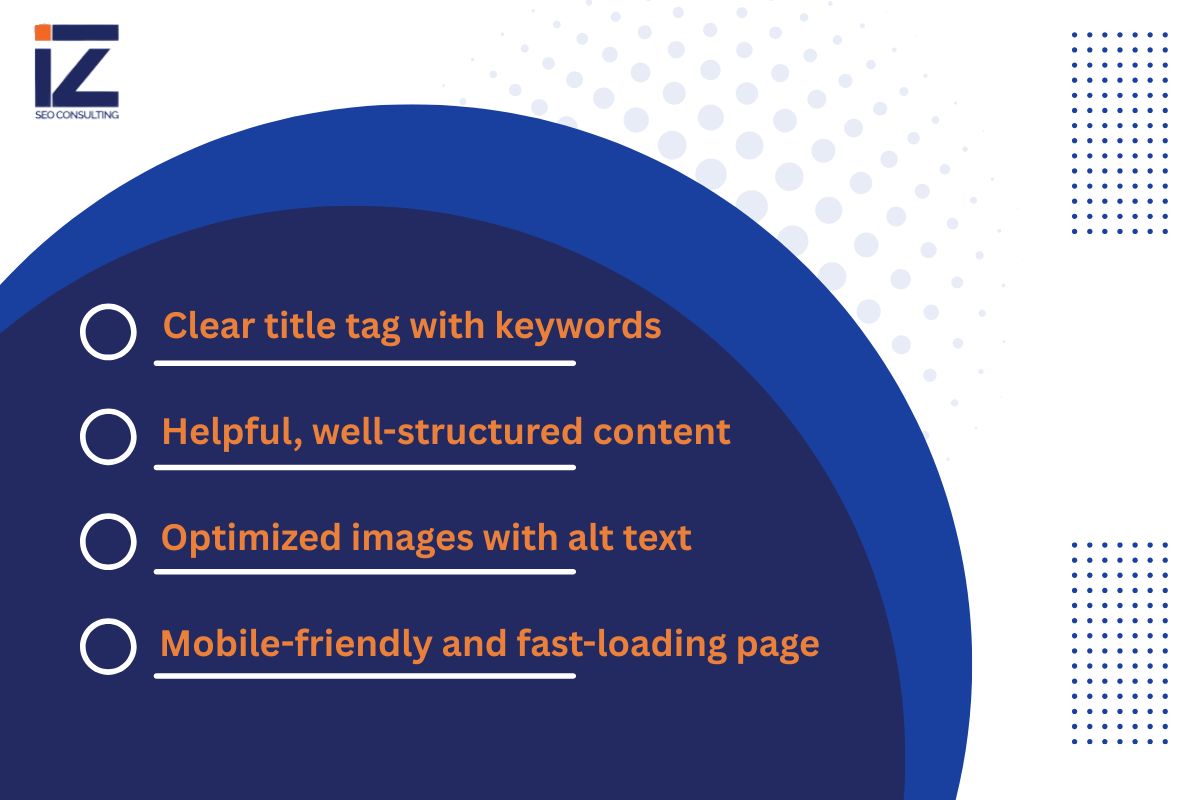
- Image Optimization: Use clear file names and add “alt text” to help Google understand what images show. This also helps users who rely on screen readers.
- Mobile Friendliness: Most searches now happen on phones, not desktops. If sites aren’t easy to use on a small screen, users will leave quickly. Here’s a great guide on how to make your website mobile-friendly.
- Page Speed: Slow websites frustrate users. Compress images, use fast hosting, and remove any unnecessary code.
- Structured Data (Schema): This helps Google understand special content like product reviews, event times, or FAQs. It can also add extra features (like star ratings) to search results.
While these may seem technical, many tools and plugins make them easy to manage, even for non-developers. Together, these elements show why on page seo importance extends beyond rankings to making websites easier to use.
On-Page SEO for Beginners: Getting Started
New to all this? Don’t worry. Those just learning about on-page SEO for beginners don’t need to change everything overnight. Start with the basics and build from there.
Here’s a simple step-by-step plan to help beginners get started:
- Pick one page to improve. The homepage or a popular blog post is a good place to start.
- Write or update the title tag. Make sure it’s clear and includes the main keyword.
- Add a strong meta description. Give readers a reason to click.
- Break up content. Use headings to make it easier to scan.
- Add internal links. Link to related pages or posts on the site.
- Optimize images. Add alt text and use small file sizes.
- Test the page on mobile. Make sure it loads fast and looks good.

These changes might seem small, but they’re part of a bigger picture. With each improvement, pages become easier to find, easier to read, and more likely to keep users interested.
Frequently Asked Questions (FAQ)
On-page SEO improvements can lead to better rankings, but results aren’t instant. It often takes a few weeks for search engines to crawl and re-rank updated pages. How quickly changes appear also depends on competition and the authority of the site.
Yes. SEO isn’t a one-time task. Updating content, refining keywords, improving load times, and checking for outdated info all help pages stay competitive as search trends and algorithms change.
Definitely, while backlinks and domain authority take time to build, good on-page SEO factors give new sites a solid foundation by making them easier for Google to understand and users to navigate.
Yes, but it’s more about intent than stuffing. Search engines are smarter now—they look for relevance and context. Using natural, well-placed keywords helps clarify what the content is about without overdoing it.
There are many tools to guide businesses: Google Search Console, Yoast SEO, Rank Math, Screaming Frog, and tools like Surfer SEO or Clearscope that analyze content against top results for target keywords.
Google doesn’t “penalize” in the sense of punishment, but poor on-page practices (like keyword stuffing, slow pages, or thin content) can prevent pages from ranking well. That’s a missed opportunity rather than a formal penalty.
AI Mode prioritizes clarity and completeness. Pages that use strong headings, structured answers, and semantic richness are more likely to be featured in AI summaries. That makes investing in clean, well-organized on-page SEO factors more valuable than ever.
Take the First Step
For those just getting into SEO, mastering what is on-page seo optimization represents one of the best ways to grow a site. Business owners don’t need to be tech experts. They just need to know how each part of a page—from the title to the images—can help content rank and perform better.
For long-term results, remember this: a well-optimized page brings better rankings, happier users, and more trust. That’s the core of what’s the most important on-page seo element and why it should be a regular part of content routines.
Need help putting all of this into action? Contact us, and we can support businesses every step of the way, from creating content to improving structure and speed. Every website deserves to be seen, and on-page SEO can help make that happen.