Planning your editorial calendar used to be as simple as picking a bunch of topics and waiting for Google to reward you. Marketers started to become more strategic and base their content calendar SEO plan on customer intent, what your audience is searching for at each buying stage. Customer intent mapping is fundamentally changing how we approach content planning.
How to Map Customer Intent for SEO and Use It to Build a Content Calendar
A solid content strategy is about figuring out why someone’s typing that query in the first place. That’s where keyword intent mapping for SEO comes in and breaks down the “why” into clear phases of the buyer’s path. When you nail the intent early on, you can match content types, formats, and publishing schedules to meet people right where they are.
Here’s how to map intent and transform it into an organized content calendar:
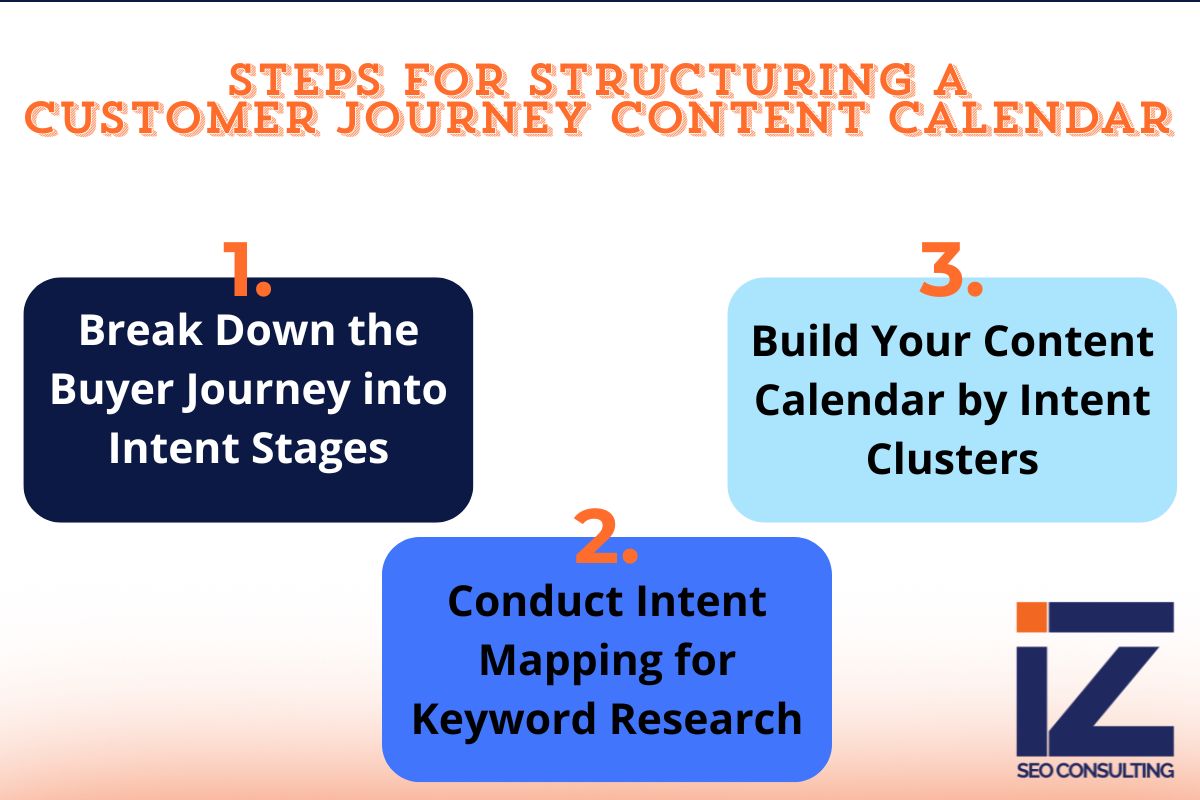
Step 1: Break Down the Buyer Journey into Intent Stages
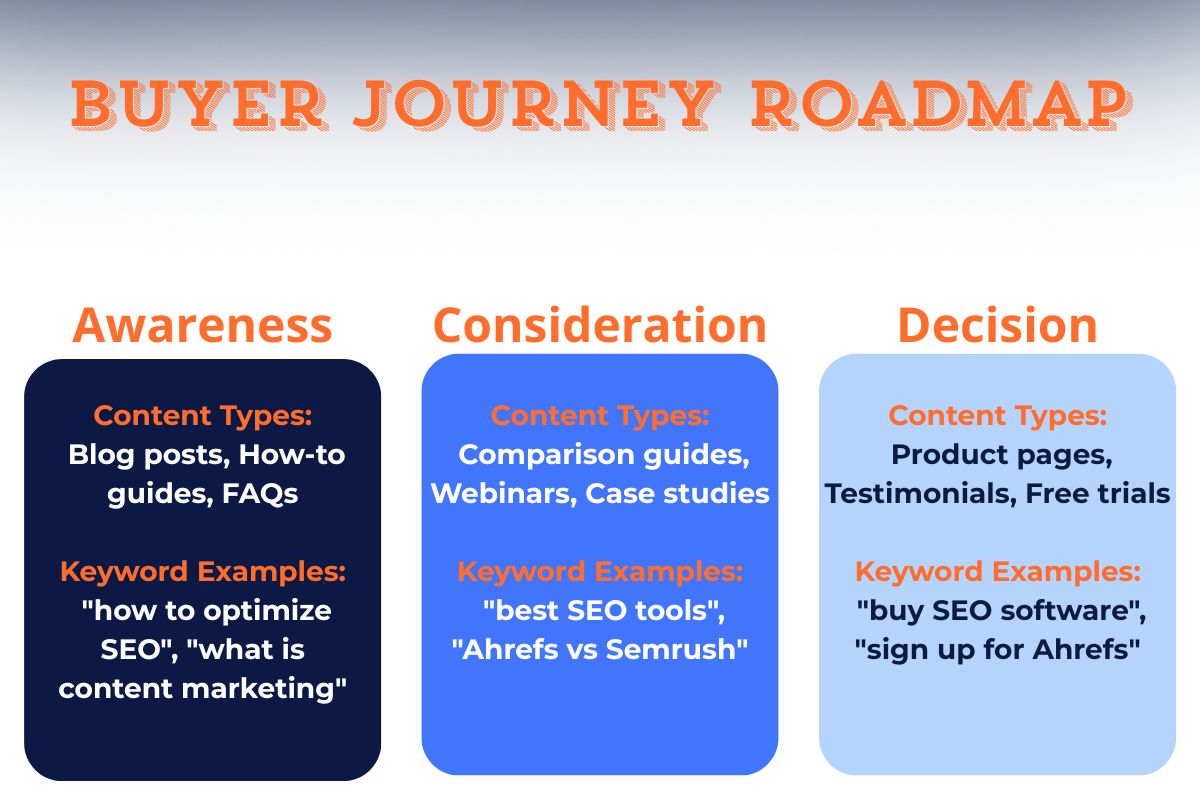
Prospects journey through three levels, and each requires unique content:
- Informational Intent – Prospects are exploring, formulating questions, and trying to find more details for a problem or concept they have just uncovered.
- Navigational/Comparative Intent – They are evaluating options, looking at various providers, and positioning themselves in the market.
- Transactional Intent – It is time to make a decision. They are ready to purchase, subscribe, or do whatever you would like them to do.
Here is what is most effective at each stage of the marketing funnel:
- Top of funnel: Basic questions can be answered using guide videos, blogs, and posts that explain the topic.
- Middle of funnel: Use your expertise in webinars, case studies, and comparison articles.
- Bottom of funnel: Call to actions, time-sensitive offers, and great customer testimonials on product pages.
Step 2: Conduct Intent Mapping for Keyword Research
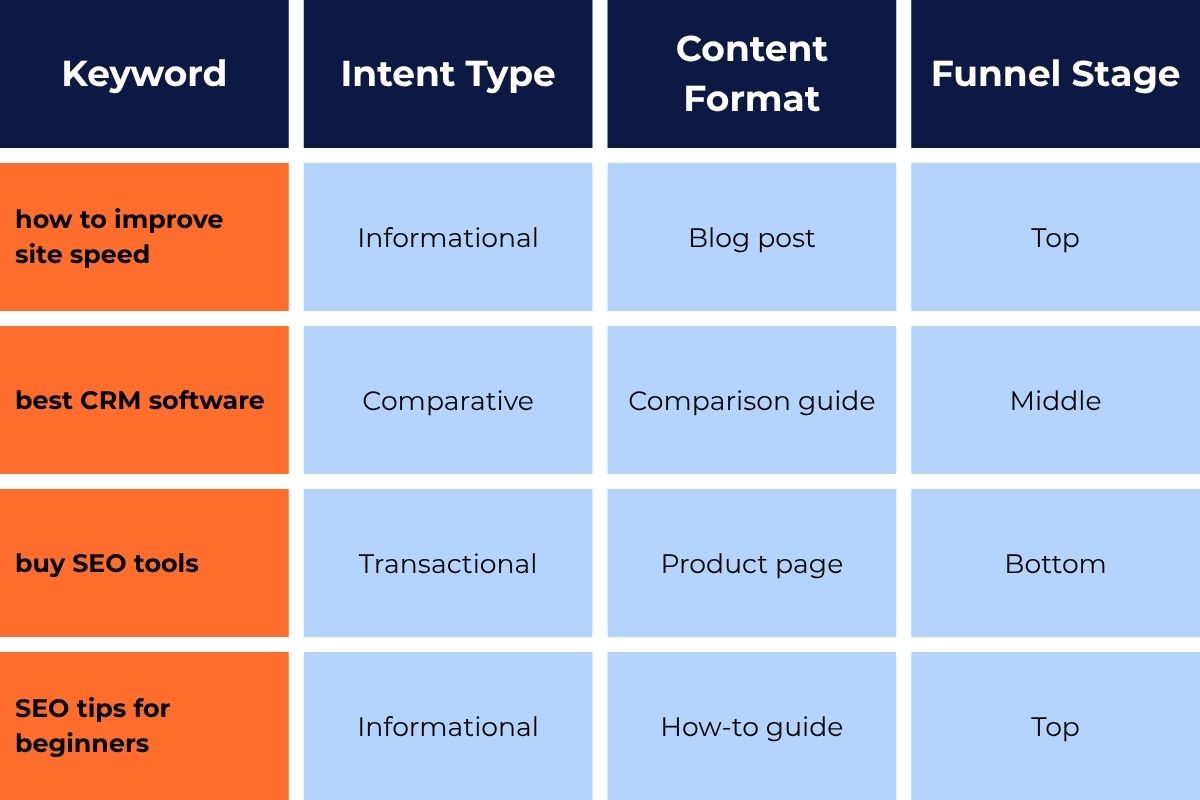
Look at your keywords and assign them to categories based on what the searcher is intending to do. You can use Semrush, Ahrefs, or just Google to understand:
- What are the page one results? Are they articles? Videos? Product pages?
- What is the searcher trying to do? Learn? Compare? Buy?
Before you write educational guides to help buyers or try to sell to people who are still trying to figure out their problems, look for mappings of intent for your keywords. This is intent mapping for keyword research in action.
🔍 Pro Tip: Look at the modifiers in your keywords. Terms like “how to,” “best,” “vs,” and “buy” indicate what stage someone’s in. Group your content ideas accordingly.
Step 3: Build Your Content Calendar by Intent Clusters
Now, take those categorized keywords and start mapping them to your calendar by intent stage. This is the essence of intent-based content planning.
- To begin with, spread awareness content throughout the year to ensure you have a steady level of visibility.
- Middle-funnel content should be scheduled to support your core products or services.
- Bottom funnel content should be synced with product launches, seasonal promotions, or any special promotional events.
This is the way to map customer intent for SEO in a way that directs prospects toward a conversion instead of just mindlessly populating your calendar.
What Is Intent Mapping in SEO?
This is organizing your keywords and content based on what the users truly need instead of merely looking at search volume or keyword difficulty. Rather than the antiquated keyword stuffing, you’re aligning with how people search and the decisions they take. If you are unfamiliar with some of these terms, our SEO terminology page has an explanation for you.
Intent mapping helps you better understand user behavior and respond accordingly:
- You will have a clear idea of what to write next.
- You will gain better user interaction metrics and a decrease in bounce rates.
- Your content and conversion goals will finally align.
Content Marketing by Search Intent: Real-World Examples
Here’s what content marketing by search intent actually looks like when you apply it:
Example 1: Software Company
- Top-funnel: “how to manage remote teams” → Educational blog post
- Mid-funnel: “best remote work software” → Comparison guide
- Bottom-funnel: “Buy [brand name] remote team software” → Product landing page
Example 2: DTC Skincare Brand
- Top-funnel: “causes of dry skin in winter” → Blog post with a subtle product mention
- Mid-funnel: “moisturizer for dry winter skin reviews” → Round-up of customer testimonials
- Bottom-funnel: “Buy [brand name] winter skincare set” → E-commerce product page
These search intent content strategy examples demonstrate how mapping keeps your content in sync with how real buyers think and move.
Common Pitfalls to Avoid
Inexperienced marketers are sometimes victim to these mistakes:
- Making assumptions about user intent without supporting data – Always validate content gap analyses with SERP studies. Always do keyword research before creating content.
- Neglecting the middle funnel – Many teams overlook the middle funnel and just go from awareness to conversion, and are confused about the poor performance.
- Overloading one stage – It’s about balance. Don’t produce 20 awareness posts and ignore transactional opportunities.
Insider’s Edge: Intent Drift Monitoring
People don’t often think about how search intent can change over time.
People don’t think about how Google changes their interpretation of keywords over time. For example, a blog about butterflies might show a shopping ad for butterflies in six months. So, using search intent to build a content calendar shouldn’t be a one-time thing.
You can revisit top step pages after 6–12 months and reassess their intent alignment. You’ll often find new opportunities based on how SERP’s evolved. This practice keeps your content fresh with regular updates.
Using Search Intent to Build a Content Calendar That Actually Performs
When you understand how to structure a content calendar with buyer intent, and you have a clear content strategy in mind, the magic happens:
- Every single blog has a goal.
- Each buyer’s journey stage is covered.
- Content types and keywords are aligned.
Instead of a blog with random articles, your customer journey content calendar shows your audience the path they are taking to content.
Final Thoughts: Begin Structuring with Purpose
Publishing pointless content is a waste of time. If you want content that works, you need to learn how to plan content calendars with buyer intent from the start. This begins with mapping intent, aligning with the customer journey, and setting a schedule for consistent reviews and adjustments.
A calendar structured this way does more than rank. It converts visitors into leads and leads into paying customers.
At Indexed Zone SEO, we assist businesses in crafting content strategies that align with user intent and drive measurable results.
FAQ
It’s classifying keywords and topics based on what the searcher actually wants—whether that’s information, comparison, or a purchase.
It makes sure your content matches what users are looking for, which boosts engagement, clicks, and conversions.
Not at all. It works for videos, landing pages, product pages, social posts—you name it.
At least once or twice a year, especially for pages that get a lot of traffic or drive conversions. Intent can change as trends and algorithms evolve.