Outranking people on Google comes down to time, consistency, and doing the fundamentals best. Google favors easier and better pages for the people. This guide is for people to move their page along. This guide is for people who are trying to go for something that actually means something.
What Google Sees
Google doesn’t rank websites, it ranks individual pages. Every element on a page needs to work together and outperform the competing results on its own. Because of that, it’s almost always faster to improve a page that’s already ranking than to start fresh with something new. Most pages don’t need a better idea. They just need better execution on the one they already have.
Recognize Search Intent First
Intention problems rather than technical problems appear to be the primary reason for poor positioning on Google. Search engines also favor webpages that match customer intent. An informational guide will supersede a sales page. Product pages will outrank blogs. Content format also affects ranking.
Break Intent Down Properly
For each of the pages that show up on the first page results, ask the following questions.
- Are the pages commercial, transactional, informational, etc?
- Is it for someone who already knows the subject matter or for someone who doesn’t?
- Do they just broadly explain the subject matter or do they solve a particular problem?
To just be in the game, matching customer intent may be enough. To be the Google champion, you need to go above and beyond matching customer intent. People also have the wrong assumption that adding more words to a page will improve positioning. That’s not the case. Winning positioning is about relevance.
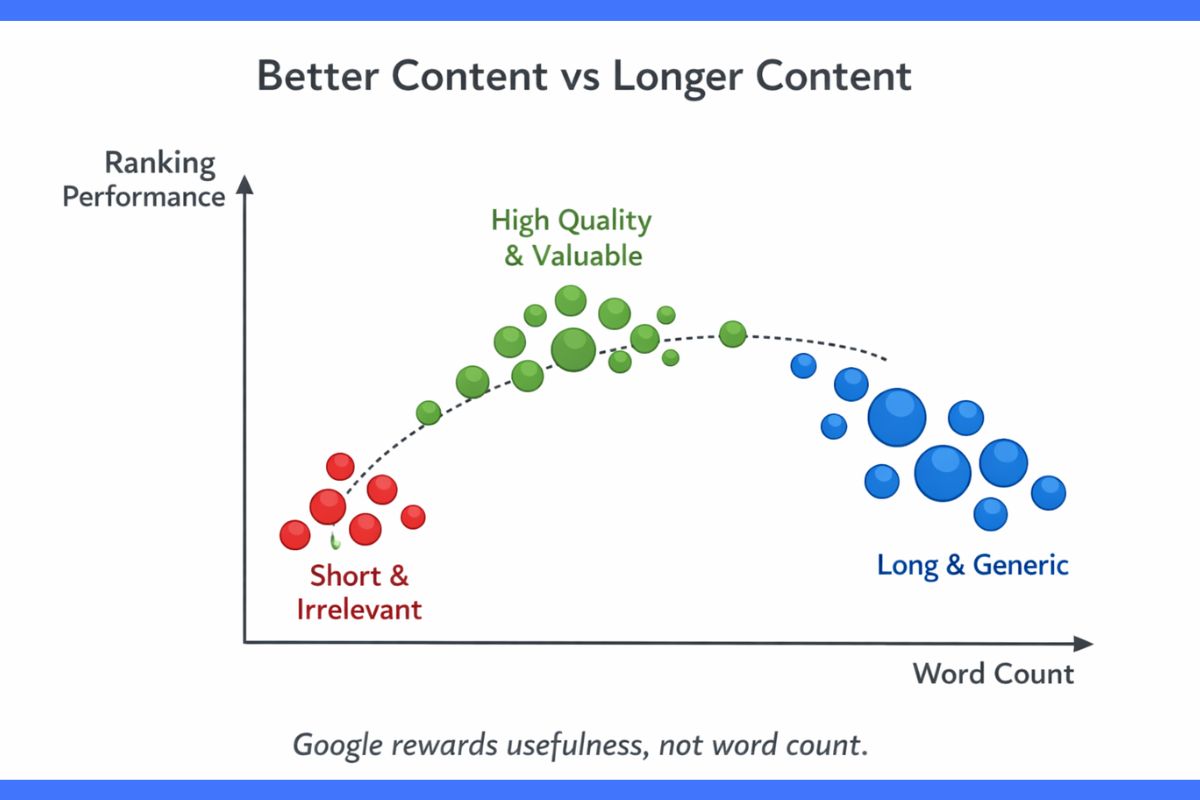
Create Better and Not Just Longer Content
Google compares your content page with all other competing content pages. If it seems that your page is just a competently reorganized version of what is already on the internet, no one will notice it. Google favors pages that offer value to the user. If other pages do not provide value, that is a feature that may help your page.
Optimizing Existing Top Results
- Answer questions other pages have not.
- Give examples, not theories.
- Provide a reasoning beyond your steps.
- Update information that is incorrect.
Many content and SEO sites are focused on keyword saturation, and while there is some merit, there is a better way. Updating information that is provided and replacing it with modern advice will provide immediate results.
Use Keywords in a Contextual and Rational Manner
Keywords and keyword phrases are undeniably important. Context and placement of keywords, however, hold more value than repetition and keyword stuffing. Your main keyword should be outrank competition on Google, and it should be placed in the beginning of the writing, and then in the middle, title, and each of the headings. Avoid stuffing it too much to lessen the chance of scaring your readers away. Your secondary keyword phrases like how to outrank your competition in Google should only be placed in the writing wherever they should is appropriate, rather than placement that is checklist prescribed. When keyword placement is done right, readers should not notice it. For a more systematic approach to finding and mapping the most appropriate targeted keywords, this guide to SEO keyword research describes how to stay away from targeting keywords that may sound good, but don’t actually convert.
Ranks That Actually Matter
While Google processes a lot of signals, there are a few fundamental signals that are the most important. Typically, pages that consistently rank higher than their competitors tend to outperform their competitors because they do the most important things, better than everyone else.
What Actually Matters
- Structure and readability of the page.
- Depth and coverage of the information.
- Effective internal linking.
- Loading speed, experience on mobile.
- Update information regularly.
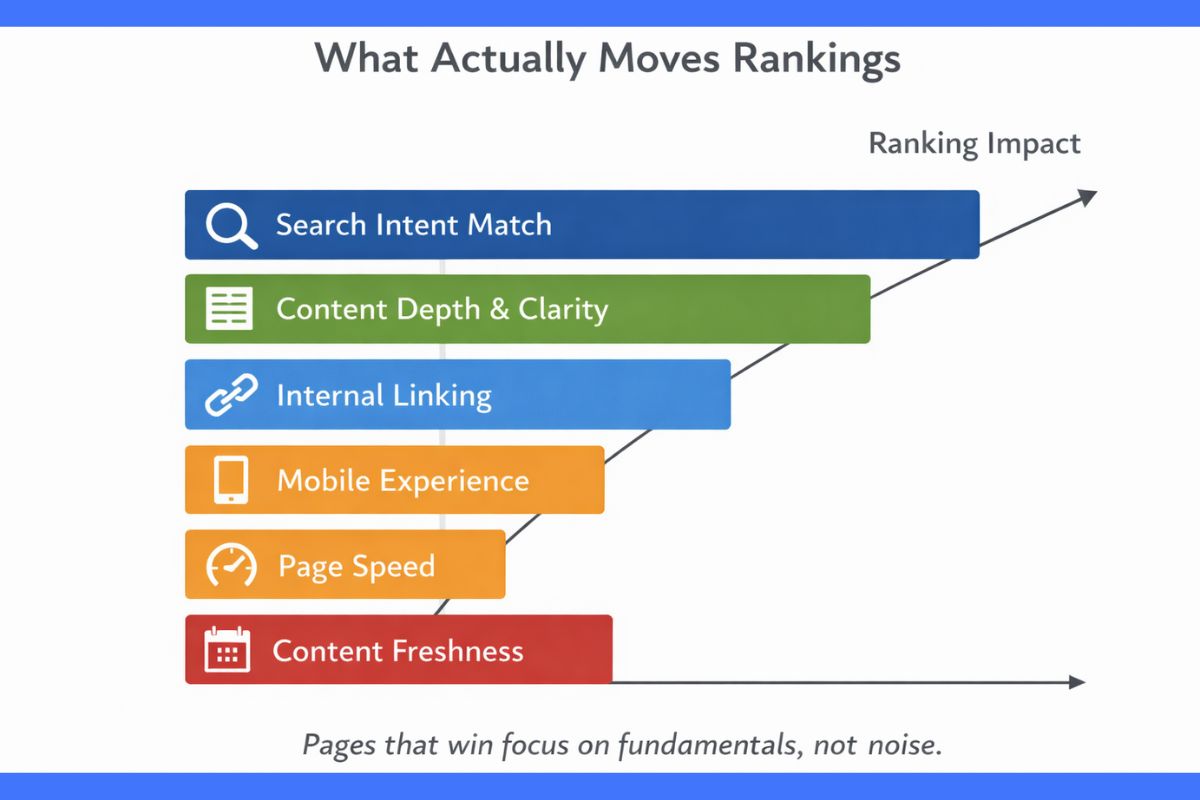
Knowledge of the major factors that influence SEO ranking allows you to channel efforts in the most effective way, preventing you from spreading your efforts too thinly on minor factors.
One Consistently Underrated Factor
While there are many factors that influence page ranking that are consistently underrated, one of the most underrated factors is the improvement of internal links from stronger pages to weaker pages. When links are created, authority and relevance is passed along, without the need for a single new backlink to be created.
Don’t Limit Yourself to Just Ranking
Being able to rank for one keyword is a great start, but that is all it is, a start. Good search engine positioning is being able to fully cover a single topic in all of the various ways it can be searched. This is accomplished by creating clusters of related content, rather than just single, standalone pages. Instead of one article trying to rank for everything, the approach looks like this:
- One core page that covers the main topic
- Multiple supportive pages that cover related subtopics
- Internal links that solidify their connection
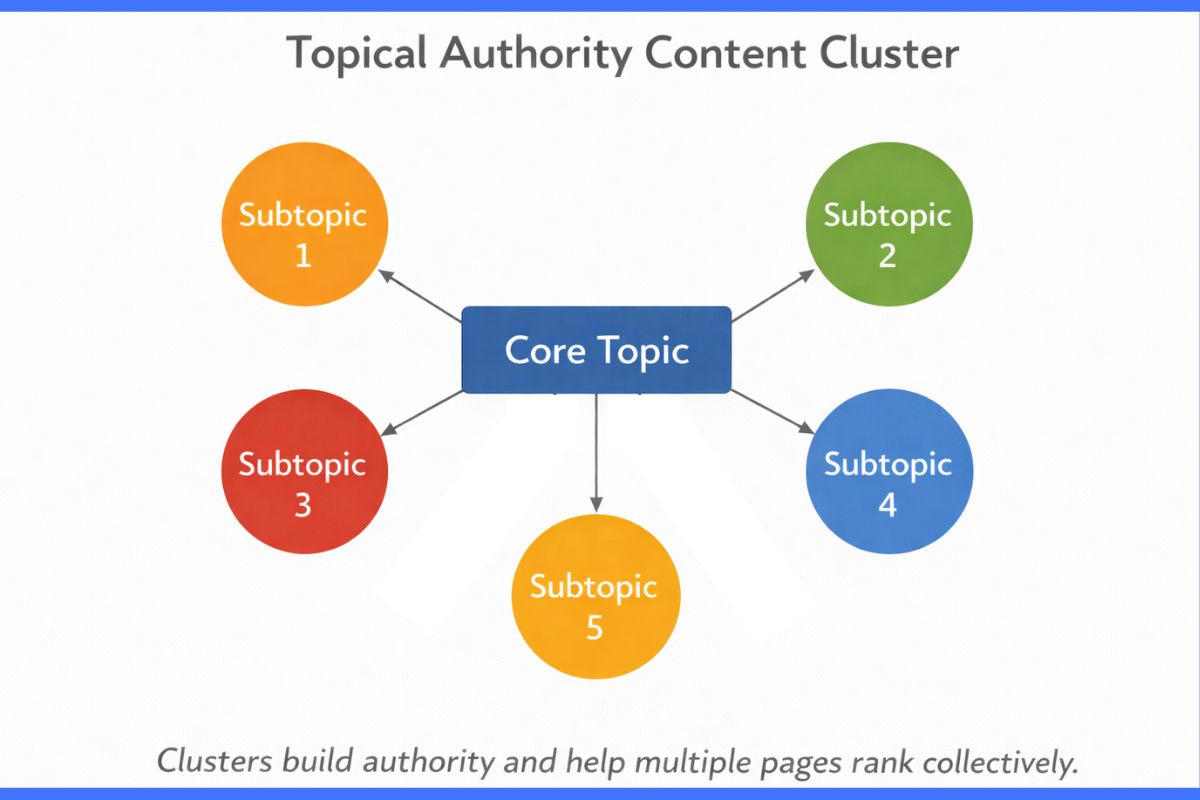
This is how you construct topical authority, and enable multiple pages to rank together over time, instead of squabbling for the same keywords.
Identify the Gaps Left Behind by Your Rivals
Blindspots are extremely common, and surprisingly easy to identify for most top ranking pages. This is where comment sections, forums, Reddit, and the People Also Ask section of Google come in handy. They are great for identifying gaps that the leading articles still have after reading them.
The most common gaps are:
- A lack of a step-by-step guide
- No up-to-date examples or screenshots
- Vague recommendations
- Outdated tactics or tools
Addressing these gaps almost always improves ranking and does not require any link building.
Stop Making the Mistakes That Hold Pages Back
Numerous pages do not perform well, not because they can not do better, but because of mistakes that are easy to fix, which have been consistently ignored.
- Over-optimization of anchor texts
- Leaving introductions vague
- Neglecting mobile optimization
- Ranking for keywords that are not relevant
Here, clear examples of common SEO mistakes and what to do about them are available. What about these outcomes? Contextualizing the problems is corrective and self-evident, something that doesn’t even need to be mentioned, and what will be published will be irrelevant. Permanent fixes to existing problems outrank and outlast temporary increases from new publications.
Here is a strategy that most SEO guides know. Seasoned SEO experts have a lot of experience, and that is contrary to typical SEO practice. Uncovering competitive velocity through ranking velocity is CX instead of limited content friction. So, instead of guessing at new formats to craft to fit your needs, take the head to the top of the outward selection for content scope in your niche, ranking scope, and outline. From each heading at the top of the outward selection. From here, fill in those sections and better your top selections, and enhance your rival to outperform otherwise. Google rewards you for preserving, otherwise, the existing framework of quality. Risk and reward are balanced, and relevance on target. Finishing touches are custom-built to keep and scope, and that seamlessly flows to totaling, enhancing.
Building Authority The Right Way
Obtaining authority is important, but it is not always necessary to do a link-building campaign. Backlinks are important, but from a relevancy standpoint, one link from a closely related site is more valuable than ten from generic directory sites. For tactics that are currently working, these proven SEO strategies center on sustainable growth rather than temporary short-term spikes.
FAQ
This is dependent on a number of factors, including how competitive the keyword is, your current location in the rankings, and the overall authority of your site. Optimizing a site that is on the second page of results typically causes its rank to improve within a few weeks.
No. In many scenarios ideal user intent matches, higher quality content, and effective internal linking, has proven more valuable in moving rankings than backlinks.
Yes. Google emphasizes the importance of relevance and usefulness. Smaller websites that are adequately optimized to rank for informational queries that are more useful to users to achieve this objective frequently succeed in this way.
While it is typically necessary to review content every 6-12 months, if a competitor on Google’s rankings makes substantial updates to their site, then more frequent updates may be needed, and updates are necessary to maintain rankings.
Where to Start
Choose one keyword. Choose one page. Make one specific improvement over what the competing pages are doing. That’s really all it takes to get started. Google rewards clarity and genuine usefulness.If you need professional help putting this into practice, the Indexed Zone SEO can guide you through the process.