Your next patient is probably searching right now. For symptoms, for a specialist, for a clinic nearby. Most of them decide who to trust before they ever pick up the phone.
The question isn’t whether patients look online. It’s whether they find you or the practice down the street.
If your website doesn’t show up when someone searches for the care you provide, you rarely get a second chance. They book with whoever they found first.
So here’s where patients are actually looking, and what it takes to be the practice they find.
Where Patients Look Before They Book
Patients do their homework long before they call. That’s the part most practices underestimate.
Most people research a provider online and read reviews before they book. That quiet research phase, long before the first call, is where practices win or lose the patient.
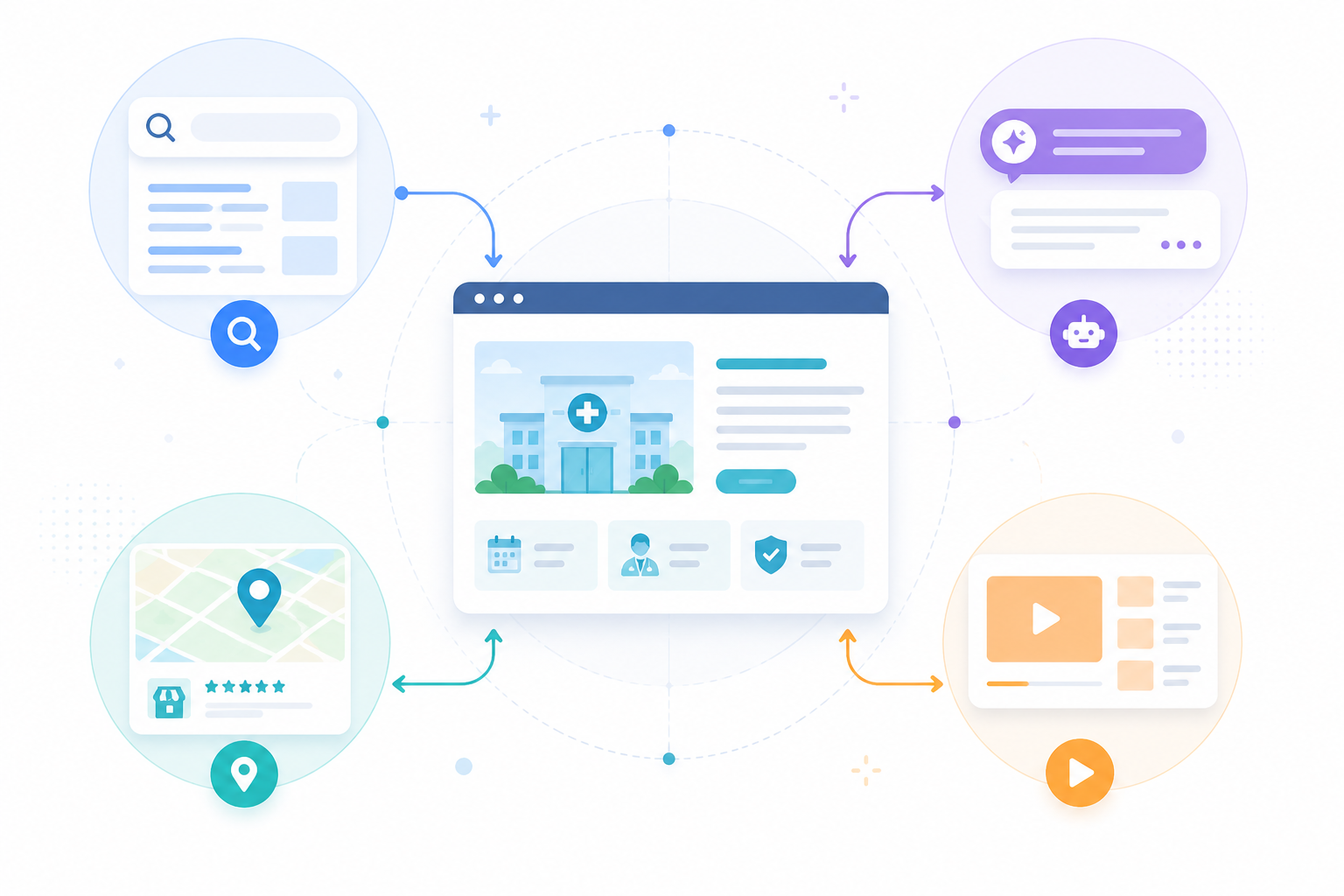
And most of that discovery starts with a plain search. Not ads, not social. People typing what they need into a search bar the moment they need care.
For most practices, that makes SEO one of the few channels that reaches patients at the exact moment they need care.
What Healthcare SEO Delivers
Done right, it changes three things:
- More visibility – Higher rankings put you in front of patients searching for the treatments, specialists, and services you offer in their area.
- Stronger reputation – Patients research before they decide. A findable site, real reviews, and useful answers build the trust that turns a search into a booking.
- Lower cost per patient – Once your site ranks, it keeps bringing in patients through organic traffic, so you lean less on paid ads.
Best SEO Practices for Healthcare Websites
Here’s what actually turns those searches into booked appointments.
Target Local Searches Patients Use
“Near me” searches for care have surged, and they carry strong intent. Someone typing “pediatrician near me” or “urgent care near me” is ready to book, not just browsing.
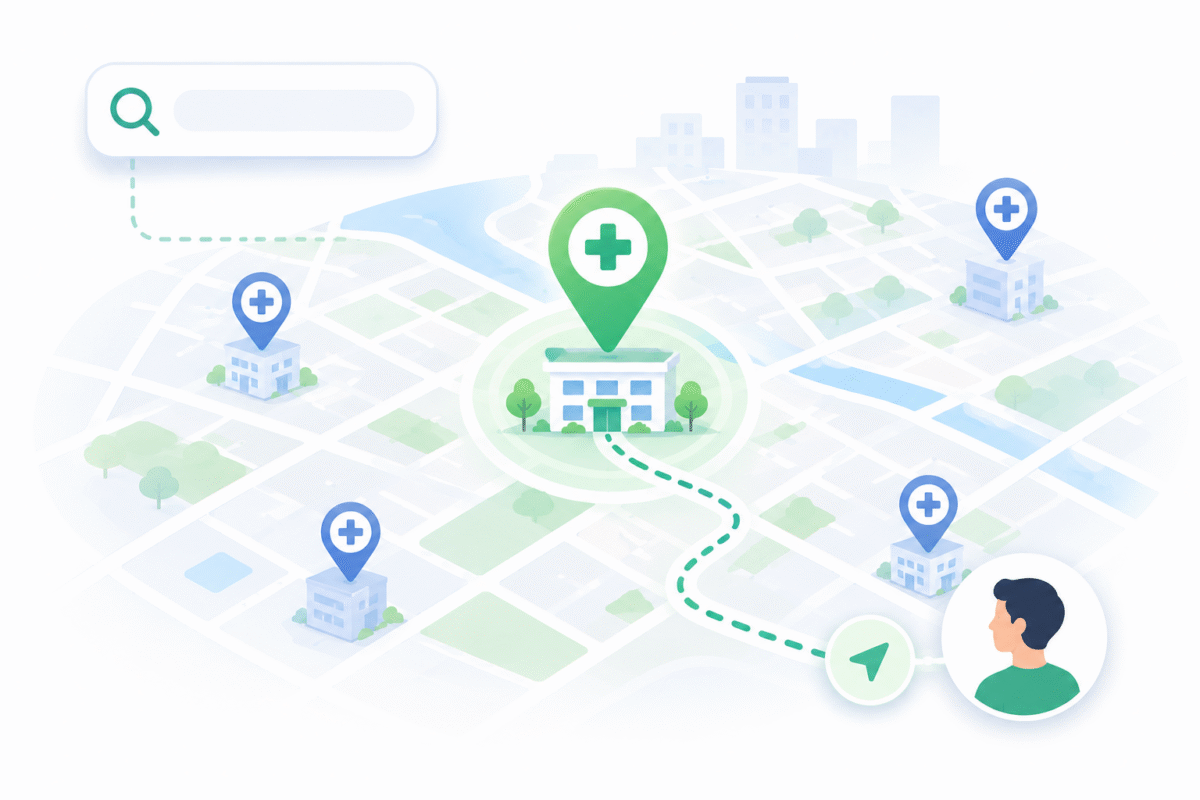
So optimize for the areas you actually serve.
The closer your pages match local intent, the easier it is for nearby patients to find you.
Indexed Zone SEO uses local optimization to connect healthcare providers with the patients most likely to book.
Improve Technical SEO and Use Schema Markup
Even great healthcare content struggles to rank if search engines can’t crawl, read, or index your site. That’s why you need to make technical SEO work for your website.
Technical SEO improves speed, crawlability, and indexation. It makes it easier for search engines to read your content and show it in results.
Schema markup and structured data give search engines extra context about:
- healthcare providers,
- services and locations,
- reviews and other key details.
That’s how search engines understand what a page is about and show richer results.
Make Your Website Easy to Use on Mobile Devices
Making your website mobile-friendly is one of the first things to check.
Most healthcare searches now happen on phones, so your site has to work for patients searching on the go for providers, services, and medical information.
Optimize Beyond Traditional Search Engines
Healthcare SEO isn’t only about Google and Bing anymore.
More and more patients ask AI tools like ChatGPT, Gemini, and Perplexity to find providers, compare options, and research conditions. If your content isn’t visible there, you’re missing searches your competitors may already be winning.
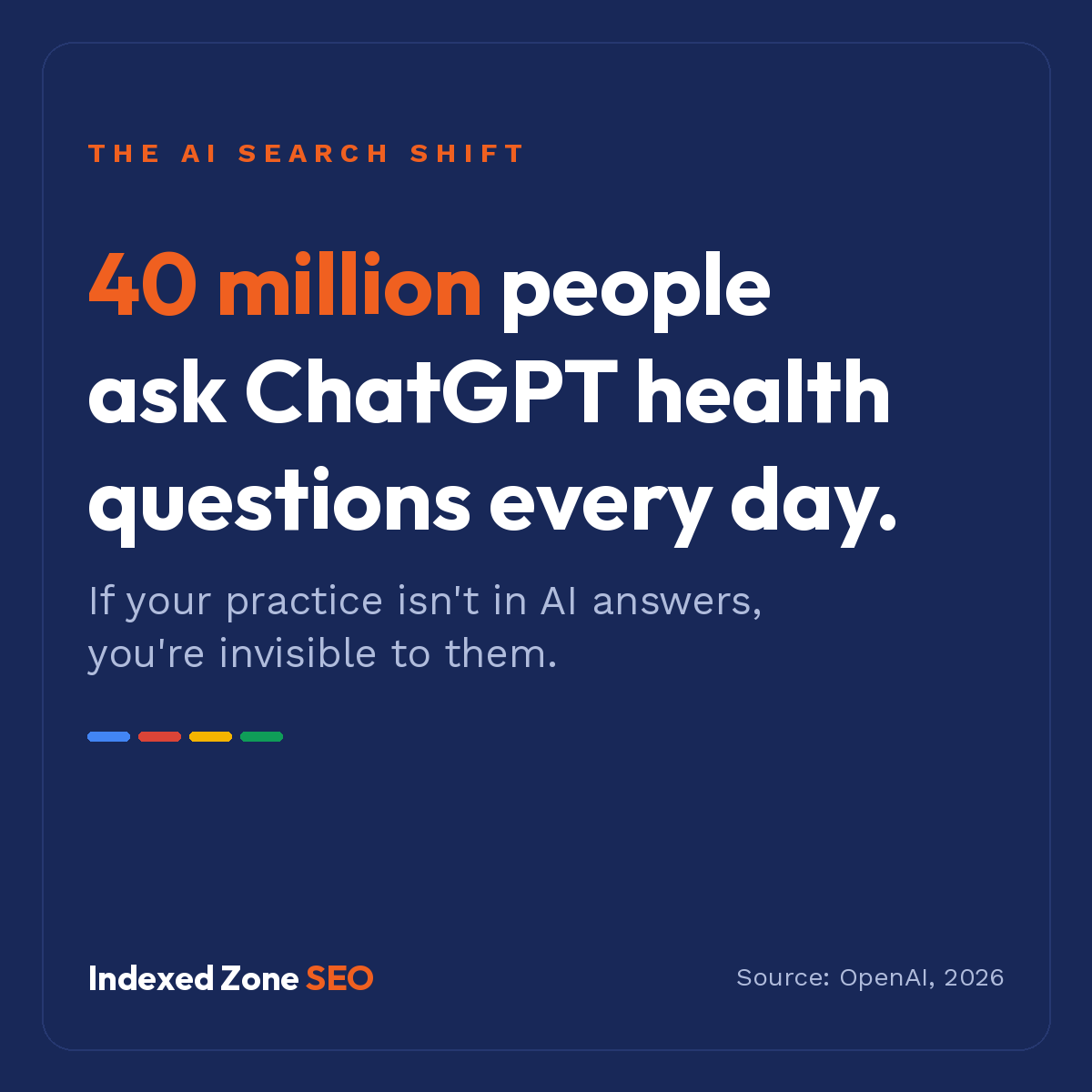
The scale is easy to underestimate. OpenAI reported that more than 40 million people ask ChatGPT health questions every day, and a late-2025 Gallup poll found that 25% of U.S. adults have already used an AI tool for health information or advice. When someone asks an assistant to recommend a provider, you are either one of the names it returns or you are invisible.
This is where AEO and GEO come in. AEO (Answer Engine Optimization) works to get your content picked as the direct answer. GEO (Generative Engine Optimization) works to get you named in AI-generated responses. Schema markup labels your healthcare services and locations in a format these systems can read more easily.
Combine Written and Video Content
Patients rarely book without doing their homework first. Good content does two jobs at once: it answers the questions they’re already searching, and it pulls in the organic traffic that turns into appointment requests.
Video makes that trust build faster. A short clip of the physician explaining a common procedure, a quick “what to expect at your first visit,” or a straight answer to a question patients always ask reassures people in a way a wall of text can’t. It also gives you more places to show up: video can rank in Google, in the video carousel, and increasingly inside AI answers.
Pair each key service page with a written explainer and a short video, then add VideoObject schema so search engines and AI tools can read it. One piece of content then reaches patients who read and patients who’d rather watch, and it builds trust before the first appointment. Pairing SEO-friendly blog posts with video is a simple way to start.
Follow E-E-A-T Guidelines
Healthcare SEO differs from most industries for one reason: your content falls under the YMYL (Your Money or Your Life) category. Inaccurate medical information can affect real health decisions, so search engines hold healthcare sites to a higher standard.
Keep content accurate, current, and reviewed by qualified professionals whenever you can. An article reviewed by a licensed endocrinologist carries far more weight than a generic piece that hands out medical advice with no source behind it.
Ready to Reach More Patients Online?
A strong healthcare SEO strategy makes it easy for patients to find you the moment they search for care.
If you want better visibility, more qualified traffic, and more appointment requests, let’s talk. Indexed Zone SEO can build a healthcare SEO strategy around your goals.
FAQ
No. It works for local clinics, private practices, hospitals, specialty centers, and telehealth providers. What changes is the strategy, based on how patients search for each one.
It can. SEO brings in ongoing organic traffic, which lowers how much you rely on paid ads for new patients. Most practices run both together rather than choosing one over the other.
Review it regularly so medical information stays accurate and current. Pay closest attention to treatment pages, service pages, physician profiles, and anything tied to healthcare regulations.